In which fields are anti-drone devices widely used?
Drones, also known as Unmanned Aircraft Systems (UAS), are now widely used across commercial, industrial, public safety, and military sectors. While they serve purposes such as inspection, surveying and mapping, photography, logistics, and emergency response, unauthorized drone activity can pose risks to aviation safety, privacy, and the security of facilities.
Anti-drone equipment has increasingly become a vital component of modern low-altitude security systems. Such equipment is commonly referred to as Counter-Drone Systems or Counter-UAS (C-UAS).
The capabilities of modern counter-drone systems extend far beyond simply "shooting down drones." According to industry data from companies like Quickset, Dedrone, and AirSight, modern C-UAS typically encompass functions such as detection, tracking, identification, and analysis, as well as countermeasures where legally permitted. Their application has expanded from the military sphere to a wide range of settings, including airports, prisons, critical infrastructure, sports stadiums, corporate campuses, government facilities, law enforcement agencies, major events, and university campuses.

In which fields are anti-drone systems primarily used?
1. Airport and Aviation Security
Airports represent one of the most critical application environments for counter-UAS (Unmanned Aircraft System) technology. Unauthorized drones entering the airspace surrounding an airport can disrupt normal aircraft operations, leading to flight delays, operational interruptions, and aviation safety risks. Consequently, airports require continuous monitoring to detect drone activity within the low-altitude airspace.
Modern counter-UAS systems employ a combination of technologies-such as radar, radio frequency (RF) sensors, and electro-optical cameras-to monitor the airspace around airports. Dedrone notes that radar offers advantages such as long-range detection, all-weather operation, and the ability to track multiple targets simultaneously, while RF sensors can analyze the wireless communication signals exchanged between a drone and its controller.
For airports, the objective extends beyond mere drone detection; it is also essential to determine whether a drone is authorized and whether its flight path poses a potential threat to airport operations. Airport counter-UAS solutions typically need to be integrated with existing airport security and airspace management systems.

2. Prisons and Correctional Facilities
Prisons and other correctional facilities represent another key application area for counter-UAS (Unmanned Aircraft System) technology. Consumer-grade drones can be used to deliver contraband-such as mobile phones or other illicit items-into prisons. Additionally, drones may be used for unauthorized surveillance of prison facilities.
In its industry-specific literature, Dedrone explicitly identifies correctional facilities as a critical use case for drone airspace security and addresses the issue of drones delivering contraband into prisons.
For prisons, counter-UAS systems must first achieve rapid detection and identification. Security personnel need to know when a drone enters the monitored zone, its flight trajectory, and whether the flight is authorized.
Given the presence of obstacles such as walls, buildings, and trees around prisons, the use of multi-sensor systems can help enhance overall airspace situational awareness.
3. Critical Infrastructure
Critical infrastructure represents a major application area for counter-UAS (Unmanned Aircraft System) equipment.
This sector encompasses facilities such as:
1,Power plants and electrical infrastructure
2,Oil and gas facilities
3,Refineries and pipelines
4,Reservoirs and water supply facilities
5,Transportation infrastructure
6,Data centers
7,Other vital industrial facilities
Drones can be utilized for unauthorized filming, reconnaissance, surveillance, and other activities. Quickset notes that modern drones pose security challenges including surveillance, espionage, smuggling, attacks on critical infrastructure, and disruption of aviation and military operations.
Critical infrastructure facilities typically place a high priority on continuous perimeter monitoring capabilities. Quickset highlights the value of technologies such as continuous 360° surveillance, radar, EO/IR (Electro-Optical/Infrared) systems, and RF (Radio Frequency) direction finding in counter-UAS applications. This reflects a significant trend in the counter-UAS industry: equipment is increasingly evolving from standalone products into integral components of comprehensive physical security systems.

4. Military Bases and the Defense Sector
The military sector remains a key area of application for counter-UAS (C-UAS) technology. Military bases, vehicles, convoys, forward-deployed locations, and other military assets may all need to contend with unauthorized or potentially threatening drones.
AirSight notes that the U.S. military already employs counter-UAS systems to protect overseas bases, while portable and mobile systems are also used to safeguard ground forces and convoys.
Requirements for C-UAS systems in military environments are typically more complex than those for civilian scenarios, encompassing stable operation in harsh conditions, multi-target detection, rapid decision-making, and integration with existing defense systems.
Quickset also identifies tactical military applications as a crucial use case for counter-UAS technology, emphasizing the need for precise tracking, reliable sensor positioning, and integration capabilities across radar, EO/IR, and RF equipment. Military counter-UAS systems generally utilize a multi-layered architecture comprising detection, command and control, and countermeasures.
5. Sports Venues and Major Events
Sports venues and major sporting events represent another key application area for counter-UAS (C-UAS) technology. These events typically draw large crowds comprising spectators, athletes, media personnel, staff, and VIPs. The unauthorized entry of drones into the airspace above a venue can pose risks to safety and privacy, as well as disrupt event operations.
AirSight has explicitly noted that C-UAS technology is already deployed at airports, sports venues, and prisons, as well as at major events such as the Super Bowl. Dedrone also identifies sports venues and arenas as critical areas for airspace security-prioritizing the protection of athletes and spectators and addressing unauthorized aerial filming.
Drone identification is particularly crucial in these environments. Since authorized drones are often used for filming, broadcasting, or event management during sporting events, security systems must be capable of distinguishing between authorized and unauthorized drones.
6. Government Buildings and Public Sector Facilities
Government agencies and public sector facilities can also utilize counter-UAS (C-UAS) equipment. Some government facilities involve sensitive information, high-profile personnel, or critical public services, necessitating continuous monitoring of the surrounding low-altitude airspace.
According to Dedrone, C-UAS systems enable the detection, tracking, and identification of drones, helping operators determine whether a drone's presence is part of authorized activity. For government facilities, the primary objective of counter-UAS technology is not necessarily the simple elimination of all drones, but rather the establishment of comprehensive low-altitude situational awareness.
By identifying a drone's location, flight path, and other relevant data, security personnel can take further actions that are appropriate for the specific situation and compliant with legal requirements.

7. Law Enforcement and Public Safety
Public safety agencies-including police, fire departments, and emergency rescue services-are also key users of counter-UAS technology. During large-scale events, emergencies, investigative operations, or the protection of critical infrastructure, unauthorized drones can disrupt emergency responses and conduct unauthorized surveillance of law enforcement personnel.
Industry data from Dedrone indicates that law enforcement and public safety agencies need to monitor drone activity around airports, critical infrastructure, major events, and densely populated areas.
For law enforcement agencies, accurately detecting drones and understanding the situation is often just as important as taking countermeasures. Modern systems typically integrate detection, tracking, identification, and command-and-control functions into a single platform.
8. Corporate Campuses and Data Centers
Corporate security represents another area where counter-UAS technology is evolving. Enterprises may need to protect R&D centers, manufacturing facilities, data centers, office campuses, rooftop equipment, and intellectual property.
Dedrone identifies corporations as entities requiring airspace security, noting that rooftop equipment at data centers, IT infrastructure, product prototypes, and intellectual property can all be targets of drone-related security threats.
For enterprises, the primary objective of counter-UAS technology is not necessarily the direct interception of drones. In many instances, simply detecting a drone and determining its location and activity status enables corporate security teams to take timely, appropriate follow-up actions. Consequently, solutions centered on detection and identification offer significant practical value in corporate environments.
9. Large-Scale Events and Temporary Security
There is an increasing need for counter-UAS technology in temporary settings such as concerts, festivals, exhibitions, and large-scale public events. Unlike fixed infrastructure, these events typically require security equipment that can be rapidly deployed and relocated.
AirSight identifies live events as a key application sector for counter-UAS technology, while Quickset has introduced mobile counter-UAS platforms capable of carrying multiple sensors. Portable and vehicle-mounted counter-UAS systems offer significant value for temporary security operations.

10. Universities and Research Institutions
University campuses and research institutions represent another significant potential application area for counter-UAS technology. Large universities typically encompass laboratories, research facilities, sports venues, dormitories, and open public spaces.
While some drones may be operated for authorized activities-such as research, surveying, media coverage, or campus management-unauthorized drones can pose risks to privacy and security.
AirSight includes universities among the sectors served by its airspace security solutions. In a university setting, the ability to distinguish between authorized and unauthorized drones is crucial; a comprehensive counter-UAS system should possess robust identification and classification capabilities rather than simply treating all drones in the same manner.
How do counter-UAS systems work?
While product architectures vary by manufacturer, modern counter-UAS systems generally operate through the following stages:
Detection → Tracking → Identification → Assessment → Mitigation/Response
Specifically:
Detection → Tracking → Identification → Risk Assessment → Countermeasure or Response
Common detection technologies include:
· Radar
· RF (Radio Frequency) sensors
· Acoustic sensors
· Electro-optical (EO) cameras
· EO/IR sensors
· Multi-sensor fusion
Both Dedrone and Quickset emphasize the importance of multi-sensor technology, as a single sensor type struggles to adapt to every environment.
For instance, radar is suitable for long-range detection; RF sensors can analyze drone communication signals; EO and infrared (IR) cameras provide visual confirmation; and acoustic sensors can offer additional detection data in specific environments.
A key trend in the industry's development is multi-sensor fusion.

Why are multi-layered counter-UAS systems becoming increasingly important?
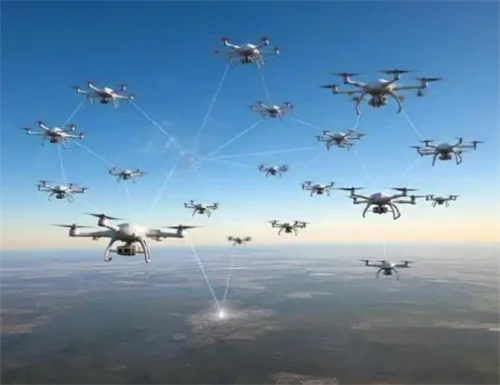
UAS technology itself is constantly evolving. Quickset notes that modern drones may employ technologies such as frequency hopping, anti-jamming capabilities, autonomous navigation, and swarming, posing greater challenges for traditional, single-method countermeasures.
An increasing number of counter-UAS solutions are adopting multi-layered architectures, incorporating:
1,Radar detection
2,RF detection
3,EO/IR (electro-optical/infrared) systems
4,Acoustic detection
5,AI-assisted identification
6,Command and control systems
7,Countermeasure technologies employed within legal limits
Dedrone also emphasizes that integrating data from various sensors into a unified C-UAS command and control platform enables the creation of a more comprehensive airspace situational awareness picture.
In other words, the core of modern counter-UAS technology has shifted from merely "shooting down drones" to establishing a comprehensive security management system for low-altitude airspace.
Why are multi-layered counter-UAS systems becoming increasingly important?
UAS technology itself is constantly evolving. Quickset notes that modern drones may employ technologies such as frequency hopping, anti-jamming capabilities, autonomous navigation, and swarming, posing greater challenges for traditional, single-method countermeasures.
An increasing number of counter-UAS solutions are adopting multi-layered architectures, incorporating:
1,Radar detection
2,RF detection
3,EO/IR (electro-optical/infrared) systems
4,Acoustic detection
5,AI-assisted identification
6,Command and control systems
7,Countermeasure technologies employed within legal limits
Dedrone also emphasizes that integrating data from various sensors into a unified C-UAS command and control platform enables the creation of a more comprehensive airspace situational awareness picture.
In other words, the core of modern counter-UAS technology has shifted from merely "shooting down drones" to establishing a comprehensive security management system for low-altitude airspace.

Legal and Regulatory Issues Regarding Counter-UAS Equipment
Local laws and regulations must be taken into account when deploying counter-UAS (Unmanned Aircraft System) equipment.
It is important to note that drone detection technologies and drone countermeasures are not necessarily subject to the same legal regulations.
For instance, AirSight points out that in the United States, the use of certain countermeasures-such as signal jammers-is strictly restricted, whereas technologies like radar and RF detection fall under different legal classifications.
Airports, enterprises, sports venues, universities, and other civilian organizations should conduct a comprehensive assessment of relevant laws and regulations, the communications environment, and actual operational needs before deploying counter-UAS equipment.

Conclusion
The application of counter-UAS equipment has extended far beyond the traditional military domain. Airports, prisons, critical infrastructure, military bases, stadiums, government facilities, law enforcement agencies, corporate campuses, large-scale events, and universities have all become key deployment environments for counter-UAS technology.
The industry is evolving from standalone counter-UAS devices toward comprehensive low-altitude security systems that integrate multiple sensors, intelligence, and networking capabilities.
Technologies such as radar, RF sensors, electro-optical/infrared (EO/IR) cameras, acoustic sensors, AI analytics, and command-and-control platforms can work together to establish robust low-altitude situational awareness. Organizations looking to deploy counter-UAS equipment should select solutions based on their specific operational environments, potential threats, detection range requirements, operational goals, and local laws and regulations.
For most civil applications, establishing reliable capabilities for drone detection, tracking, and identification is typically the first step toward building a responsible and effective low-altitude security system.