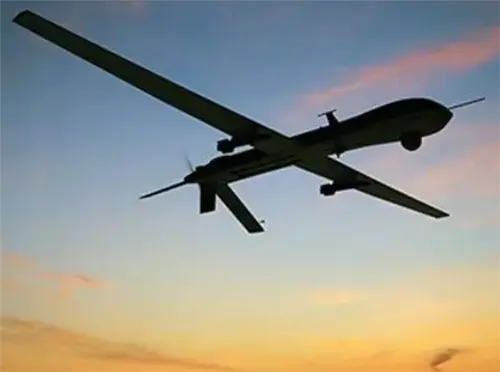
In the current era of rapid technological development, the application of drones is becoming increasingly widespread. They are used for aerial photography, inspection, mapping, logistics, agriculture, emergency rescue, etc. However, on the other hand, unauthorized flights, surreptitious filming, entering restricted areas, approaching important facilities, and even drones carrying dangerous payloads have made low-altitude safety issues increasingly real. To address these problems, we need to interfere with drones to ensure low-altitude safety and privacy security. This article will introduce several common methods of drone interference, so that everyone can understand how to deal with potential drone threats.
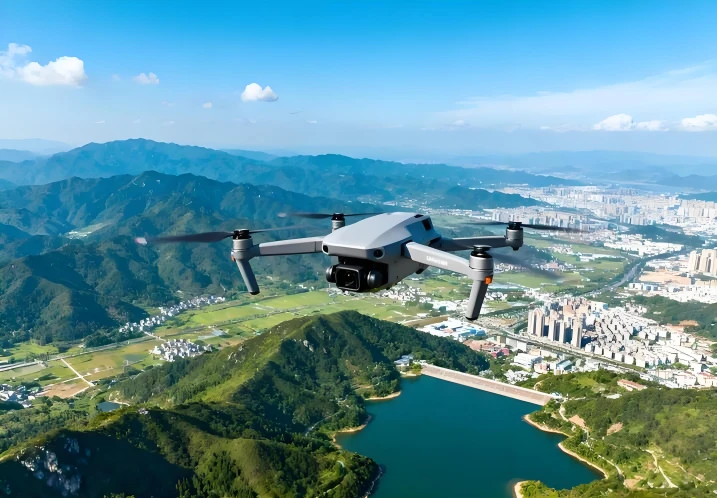
First, electromagnetic interference: causing the unmanned aircraft to "lose contact"
Electromagnetic interference is the most familiar type of drone interference for everyone.
Its principle is not complicated. It interferes with the remote control signal, video transmission signal or navigation signal of the drone, preventing it from receiving instructions normally and maintaining stable positioning.
When some ordinary consumer-grade drones encounter interference, they may return to their base, hover, make an emergency landing, or even lose control completely.
The advantage of this method is that it is quick to deploy, has relatively low costs, and is relatively simple to operate. Therefore, it is commonly used in scenarios such as event security, park patrol, and temporary control.
However, it also has shortcomings.
If the drone has set a pre-planned route and does not rely on real-time remote control; or uses anti-interference links, visual navigation, inertial navigation, or even special fiber optic control methods, ordinary electromagnetic interference may not be effective.
Therefore, electromagnetic interference is not omnipotent. It is more suitable for dealing with conventional drones that rely on remote control and navigation signals.

Second, navigation deception: Making the drone "take the wrong route"
Navigation deception can be understood as "deceiving drones".
Many drones rely on satellite navigation to determine their positions. Navigation deception involves creating false navigation information to cause the drones to misjudge their current locations, thereby deviating from the flight path or flying towards a designated area.
Compared to direct interference, navigation deception seems more mild. It does not abruptly cut off the signal but rather makes the target "fly wrong on its own".
However, this method has relatively high requirements for the type of target and technical conditions. Not all drones can be deceived, and not all scenarios are suitable for using this method.
If the target does not rely on satellite navigation or has a strong ability to resist deception, the effect of navigation deception will significantly decrease.

Third, Protocol Takeover: Make the drone "listen to you"
The protocol takeover sounds more like "hacking into the drone".
It attempts to access the control link by identifying the communication protocol of the target drone, thereby making the drone perform actions such as returning, landing, and hovering.
The advantage of this method is that the handling is relatively mild. Especially in law enforcement and evidence collection scenarios, if the drone body and payload can be retained, the subsequent analysis will be more convenient.
However, the problem is also obvious: the prerequisite is that you need to "recognize, connect, and control".
Drones of different brands, different models, and different modifications may have completely different communication protocols. Once the target is encrypted, frequency-modulated, or modified, the difficulty of takeover will increase significantly.
Therefore, protocol takeover is more suitable for known models and relatively controllable scenarios.
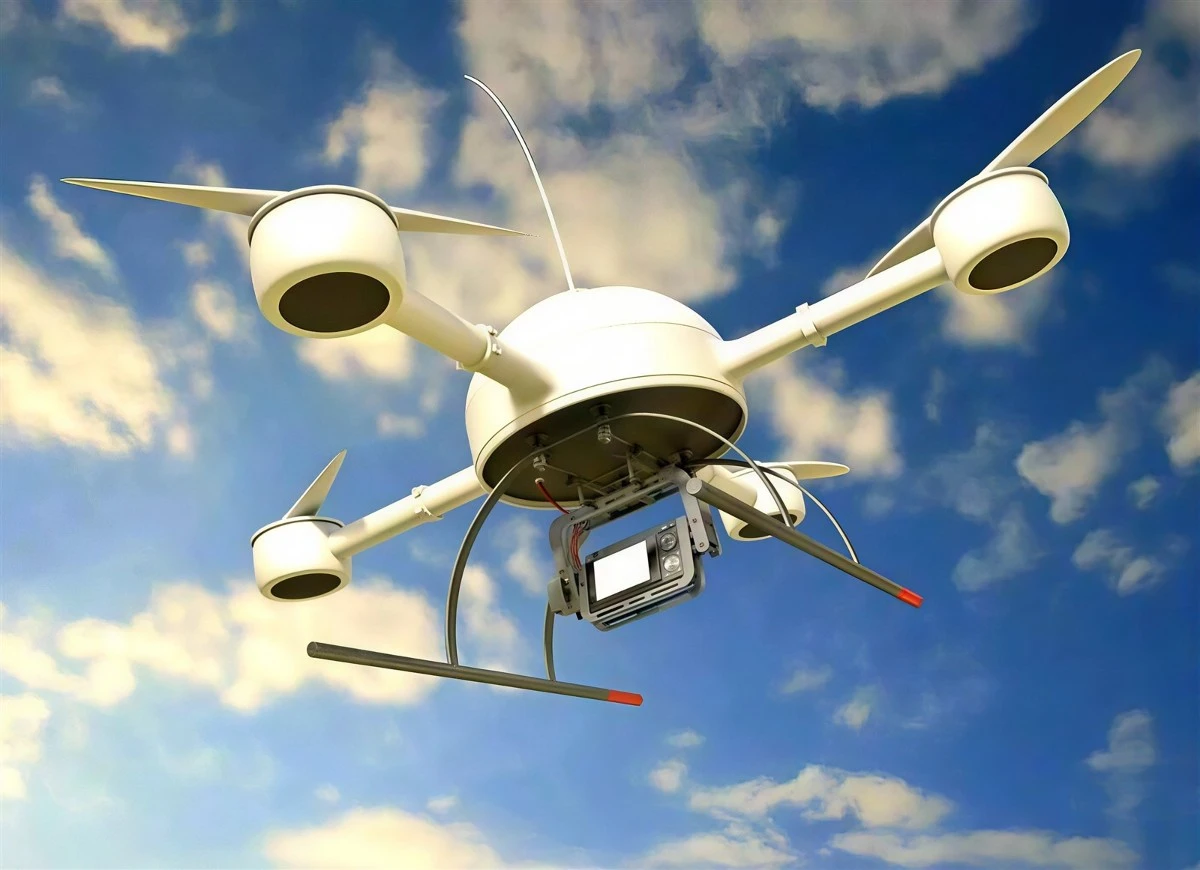
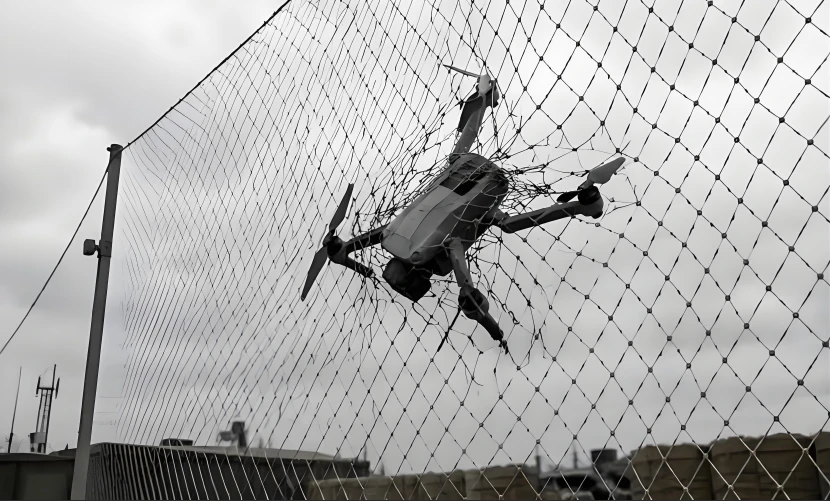
Fourth, net capture: "Grabbing" the drone
Net capture is a relatively straightforward method of interfering with drones.
Some are net guns, some are net projectiles, and others involve using another drone to carry a net and entangle, capture, or force-land the target drone.
The biggest advantage of this method is that it causes less collateral damage. Unlike direct destruction that leads to the immediate downing of the target, it has certain value in scenarios where there are large crowds and evidence needs to be preserved.
However, net capture also has inherent limitations.
It usually has a relatively short range of effect, and has high requirements for the speed, altitude, and angle of the target. If the target flies very fast, or there are many of them, or it is carrying dangerous payloads, net capture may not be the most suitable method as the main approach.
Therefore, net capture is more like a supplementary method used in close-range and low-risk scenarios.
Fifth, lasers and high-power microwaves: Using energy to counter unmanned aerial vehicles
Laser and high-power microwave belong to the interference methods for unmanned aerial vehicles.
Laser mainly works by continuously shining on the key parts of the target, causing failures in the structure, battery, sensors, or power system of the unmanned aircraft.
High-power microwave mainly acts on the internal electronic systems of the unmanned aircraft, affecting its normal operation with strong energy.
These methods sound very advanced and do have advantages such as quick response, high precision, and strong continuous handling capabilities.
However, they are not without limitations.
Laser is affected by factors such as rain, fog, dust, obstruction, and target maneuvering; high-power microwave needs to consider energy control, electromagnetic safety, and usage boundaries.
That is to say, directed energy countermeasures have great potential, but to function stably, they cannot do without the cooperation of detection, tracking, and command systems.

Sixth, kinetic hard-hitting attack: Directly stop the threat.
The logic of kinetic hard kill is straightforward: Since it cannot be interfered with or taken over, it can be intercepted physically.
Common methods include interceptor missiles, interceptor aircraft, and artillery shells.
Its advantage lies in greater certainty. When it comes to autonomous flying drones, anti-interference drones, fiber-optic controlled drones, and suicide drones, soft kill methods may not be reliable enough. In such cases, hard kill becomes extremely important.
However, hard kill is not simply "launching and done".
To truly intercept the target, one needs to first detect it, identify it, continuously track it, assess the threat level, and finally complete a precise interception. Any problem at any stage will affect the final outcome.
Therefore, behind hard kill, there is actually a complete system capability.
Seventh, Future Trend: It is not achieved through a single device, but through a systematic defense approach.
After looking at these methods, it will be clear that no single drone interference technique can solve all problems.
Electromagnetic interference is suitable for conventional drones; navigation deception is suitable for targets that rely on navigation; protocol takeover is suitable for known models; net capture is suitable for close-range low-risk scenarios; laser and microwave are suitable for rapid handling under specific conditions; kinetic hard kill is suitable for high-threat targets.
The truly complex low-altitude security scenarios often require the combination of multiple means.
For example, first use radar or optical-electrical equipment to detect the target, then conduct identification and tracking; if it is a common unauthorized flight, interference or deception can be used for handling; if it is a high-threat target, hard kill interception may be necessary; after the handling, it is also necessary to assess whether the target has truly failed.
This is why drone interference is moving from "single equipment" to "systemic defense".
The truly valuable drone interference capabilities in the future will not only be about whether drones can be driven away, but also about being able to achieve: early detection, accurate identification, quick handling, and effective interception in complex scenarios.
The low-altitude area is becoming increasingly busy, and low-altitude security will also become increasingly important.
Drone interference is no longer a simple equipment issue, but a construction issue of a complete set of low-altitude security capabilities.
Disclaimer: This article is for reference only and does not provide legal or practical advice regarding drone interference. The regulations for the use of drone jammer vary by region; actual deployment must comply with local laws and be carried out by authorized professional organizations.
We are a Chinese manufacturer. If you need a drone jammer and want to know more about its functions and usage methods, please contact us at info@alasartech-security.com.