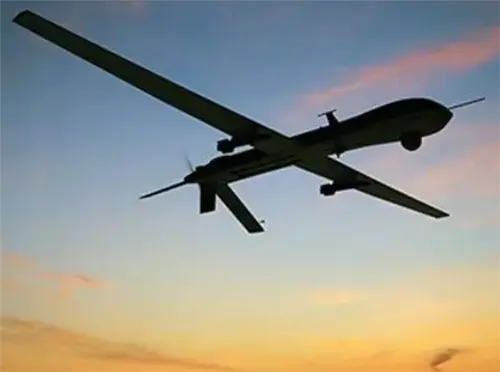
Drone jammers are strictly restricted in most countries and regions. The private sale, purchase, possession or use of drone jammers are all illegal acts. The legal usage rights are strictly limited to the military, the police, and a few government agencies with special authorization. For enterprises, critical infrastructure operators, event organizers and private owners, understanding the core dividing line of "detecting legal and interfering illegal" is crucial to avoiding hefty fines and even criminal liability. For civilian scenarios, a legal and effective alternative solution is to deploy professional drone detection and identification systems - detect first and then make decisions, rather than blindly interfering.
Based on the current laws and regulations of various countries, this article systematically reviews the technical principles, legal status, and relevant knowledge of drone jammers, providing an operational compliance path reference for institutions with low-altitude security needs.

First, the technical principle of the drone jammer
1.How do jamming devices work?
The working principle of drone jammer can be mainly divided into two types. One type is the signal suppression type, which involves emitting strong interference signals of the same frequency as the remote control or video transmission frequency of the drone to cut off the communication link between the drone and its operator, forcing the drone to hover in place or automatically return to its base. The other type is the navigation deception type, which generates false satellite navigation signals (such as GPS, Beidou, GLONASS, Galileo, etc.) to cause the position information received by the drone to deviate, thereby achieving virtual fences or repulsion effects. The latter has gradually become the mainstream technical direction in recent years due to its lower transmission power and less impact on the surrounding electromagnetic environment.
2. The fundamental difference between interference and deception
Droning interference, also known as signal interference, is a technology specifically designed to block communication between drones and their operators. Its core lies in cutting off the control signals and GPS signals of the drones, thereby preventing them from receiving instructions from external sources. The purpose of this technical means is to force the drones to activate the pre-set safety procedures, such as hovering, emergency landing, or automatic return to the take-off point.
The working principle mainly involves using a high-power signal transmitter to send strong interference signals to the drones. These signals will cover the communication frequency bands of the drones, such as 2.4GHz, 5.8GHz, or GPS frequency bands, thereby blocking the drones from receiving normal control signals.
Once the receiver of the drone is affected by these interference signals, it will be unable to effectively interpret the instructions sent by the remote controller, resulting in control failure.
Its main application scenarios are the prevention of drone interference in some government facilities, airports, prisons, etc., in high-security areas. During large events or VIP protection, drone jammers are also used. Besides, temporary enhancement of airspace security also requires drone jammers.
The core of drone deception technology lies in sending forged GPS signals to the drones. This technical means aims to mislead the positioning and flight direction of the drones, enabling attackers to control their flight paths and easily guide the drones from their designated positions to other areas.
It achieves its function through two key steps. Firstly, professional equipment is used to generate forged GPS signals, which are meticulously simulated with the data of the global positioning system. Then, through the so-called "GPS deception" method, when the strength of these forged signals exceeds the real signals, the navigation system of the drone will mistakenly believe these fake signals and recalibrate its position and flight direction based on them.
Drone deception technology can be used in various situations, including changing the flight path of the drone to avoid sensitive or protected areas. Additionally, in the military or intelligence fields, this technology can also be used to secretly direct enemy drones, providing strong support for combat operations.
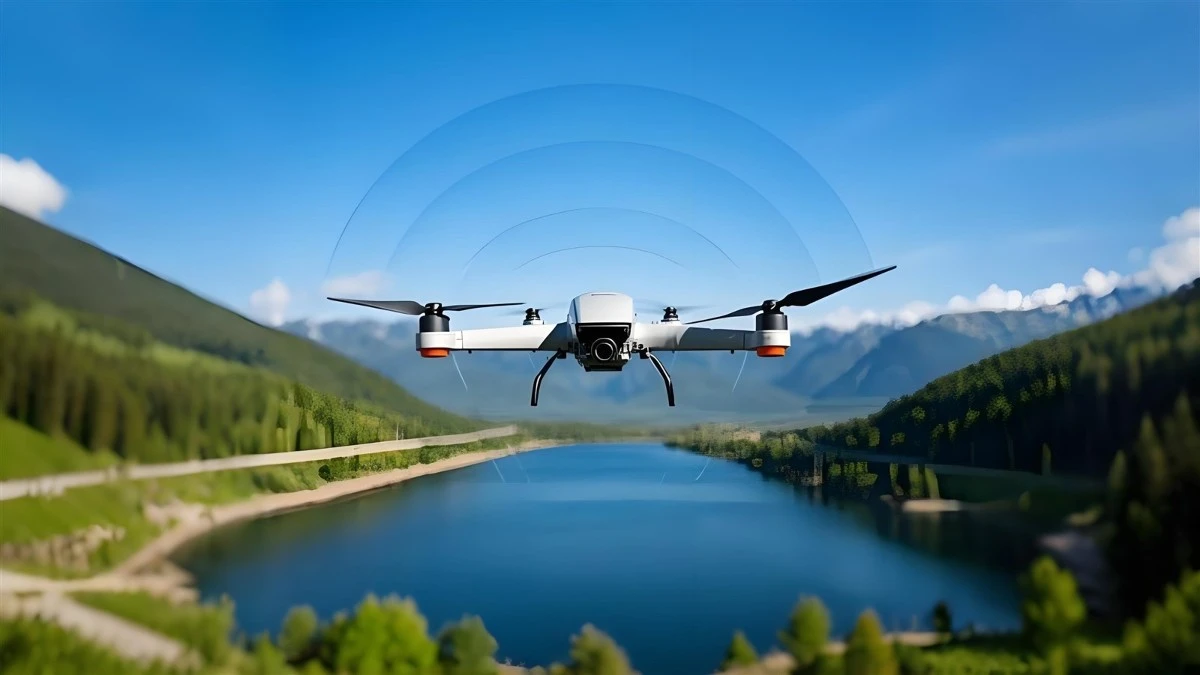
Second, the legal classification of the drone jammer: Why does it fall under the "prohibited" category of devices
The drone jammer, also known as a drone countermeasure device or a drone signal blocker, its "active radio frequency interference" directly touches the bottom line of radio management in various countries: the radio spectrum is a scarce resource owned by the state and must be used with a license.
The core legal logic lies in that the jammer does not differentiate targets. The radio frequency energy it emits will indiscriminately affect all legal radio services operating on the same frequency band within the coverage area - including but not limited to public mobile communications, Wi-Fi networks, aviation navigation GPS signals, and emergency communication channels. Therefore, major economies around the world have included drone jamming devices in the "prohibition of private possession" or "strict licensing" regulatory categories, rather than as ordinary security products.
From the perspective of legal sources, drone jammers are mainly regulated by three types of laws: the first is radio management regulations, the second is aviation safety regulations (involving interference or damage to aircraft), and the third is export control regulations (interference devices are usually classified as dual-use items). These three layers of legal frameworks jointly form a strict control over the entire chain of "production - sale - possession - use - cross-border transfer" of drone jammers.
A necessary clarification is needed for a conceptual distinction: The "detection" systems of drones (radar, radio frequency detection, optical tracking, acoustic sensors) and the "countermeasure/interference" systems have fundamentally different legal statuses. The former passively receive signals or perceive targets through non-interference methods, and in most countries, they are considered legal security devices; the latter actively emit radio frequency energy to attempt to block communication and belong to a category subject to strict control or even prohibition.

Third, why using personal drone jammers is considered a "red line"
1. Interfering chain risks
The drone jammer cannot identify the target. While suppressing the drone signal, it will indiscriminately affect all legal communications in the same frequency band - including Wi-Fi networks, Bluetooth devices, mobile communications, and even aviation navigation systems. In emergency situations, this may directly endanger public safety: police radios, emergency dispatching, and fire communication may all be blocked by the jammer.
The area around airports is particularly sensitive. GPS interference can affect the aircraft navigation system, and radio frequency interference may endanger air traffic control communication.
2. Physical risks of out-of-control drones
When the drone becomes uncontrollable due to interference, its fall trajectory is unpredictable. In densely populated areas or on major traffic routes, this poses a direct physical injury risk. When legal law enforcement agencies use jamming equipment, they must balance the "drone threat" and the "fall risk" and weigh the benefits and risks. Private operators obviously lack this judgment ability and legal exemption basis.
3. Specific legal consequences
The private marketing, sale, and import of drone jamming equipment are illegal. This means that even if the equipment is not operated, merely owning an imported drone jammer from overseas may trigger legal consequences. In some countries, such cases will be transferred to the Ministry of Justice and involve fines and criminal charges, as well as the confiscation of equipment and corresponding illegal gains.

Fourth, legal countermeasures approach: prioritize detection, and be cautious with interference
1.Core principle: Probe first, then decide
"You cannot interfere with targets that you have not detected, tracked, and classified." This is the fundamental logic of anti-drone operations. Blatantly activating the interference device not only is inefficient but also exposes legal issues.
The correct operation procedure is: Detect→ Track→ Identify→Interference. Interference is the last step, not the first.
2. Limited scope of legal mitigation measures
Even in institutions with legal authorization, interference is not the sole or preferred mitigation method. Navigation deception is an alternative: by emitting false GPS signals to divert drones from their routes or force them to land, rather than simply blocking communication.
Precision interference systems minimize the impact on surrounding communications by implementing directional interference only on the specific frequency bands of identified drones. Such systems are typically deeply integrated with detection sensors, triggered by the sensors rather than being manually activated blindly.
3. Compliance strategies for civilian scenarios
For critical infrastructure operators and private security companies, the compliant approach is to deploy detection systems rather than interference devices. Detection systems do not emit interference signals and do not violate radio management regulations. However, they can provide real-time alerts and situational awareness, enabling security personnel to take manual response measures (such as notifying law enforcement agencies, initiating physical protection procedures).
If an organization truly believes it needs interference capabilities, the correct approach is to establish a partnership with law enforcement agencies with legal authorization. Qualified personnel should operate the interference devices within the authorized framework, rather than purchasing and using them on their own.

Fifth, Core Principles and Risk Warnings of Compliance Procurement
Principle 1: First, confirm whether your organization has the legal authorization.
Usually, only the military, the police, and key target management units authorized by the government can be equipped with drone jammers. If your organization is not on the authorized list, any procurement of "jamming functions" should be immediately terminated and redirected to a pure detection solution.
Principle 2: Detection and jamming must be evaluated and purchased separately.
The legality of a system depends on whether it has the ability to "emit jamming signals". An integrated system combining "detection + jamming" may still face legal risks due to the interference module even if the detection part is legal. The compliant approach is: purchase the pure detection layer and hand over the decision-making power on "whether and how to mitigate" to the legally authorized agency.
Principle 3: Reviewing export documents is the legal obligation of the buyer.
For cross-border procurement, the buyer cannot exempt themselves by claiming "not knowing this is a controlled item". If the supplier cannot provide legal export control compliance documents, end-user proof, or technical materials to the customs, the transaction itself is a high-risk signal.
Principle 4: Be vigilant against the misleading of "online purchase".
The so-called "drone jammer" circulating on the internet are largely sourced from gray channels without model approval or production identification. These devices not only use illegally but also their radio frequency parameters often have not undergone compliance testing, and the interference risk to surrounding communications is uncontrollable.

Sixth, Conclusion
The legal status of drone jammers is highly consistent across major judicial jurisdictions worldwide: strict regulation, and private use is generally prohibited. This framework is based on a fundamental understanding of the public nature of the radio spectrum and a prudent consideration of the potential risks of incidental interference to public safety.
For organizations facing drone threats - whether it be enterprises, airports, critical infrastructure, or large-scale event security - the legal and effective starting point is detection, not jamming. Detection systems provide situational awareness and decision-making basis, without crossing legal red lines. When detection confirms an enemy threat and the organization has legal authorization, then consider the means of jamming under a strict operational framework.
In the anti-drone domain, "capability" and "legality" must be built simultaneously. Detect first, comply first, and then consider jamming - this sequence cannot be reversed.

Disclaimer: This article is for reference only and does not provide legal advice. The laws and regulations governing the purchase and use of drone jammers vary by country, region, and usage scenario. Before taking any actions related to anti-drone procurement or operation, it is essential to consult a lawyer with the appropriate jurisdictional qualifications and confirm the specific compliance requirements with local radio management authorities, civil aviation management departments, or law enforcement agencies.
We are a Chinese manufacturer. If you need a drone jammer and want to know more about its functions and usage methods, please contact us at info@alasartech-security.com.