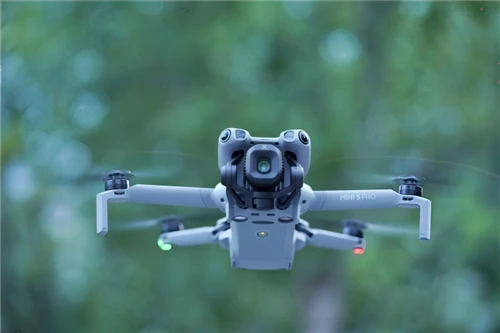
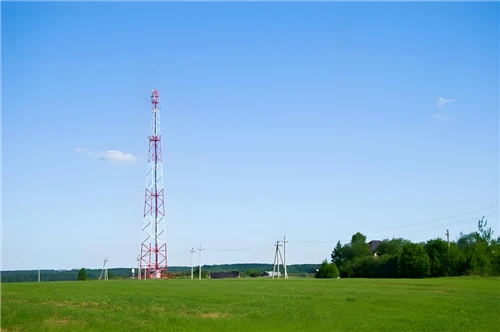
With the rapid development of drone technology and the reduction in costs, drones are being increasingly applied in fields such as aerial photography, logistics, and agriculture. However, they also bring some safety risks. For instance, drones may be used for illegal surveillance, malicious attacks, etc. The "unauthorized flight" phenomenon caused by drones poses a significant threat to public safety, privacy protection, and the operation of critical facilities. To address these malicious behaviors and threats, we need to take corresponding measures for prevention and response. Anti drone jammer is designed to address these issues. It can effectively detect, identify, and counter drones, thereby protecting the safety of personnel and property.

First, introduction to the anti drone system and its core working process
1.Introduction
Anti drone system is a comprehensive term referring to various technologies and systems used for detecting, identifying, tracking, and ultimately eliminating unauthorized or hostile drones.
Although the anti drone system technology was initially designed for battlefield air defense, its applications have rapidly expanded to military, government, and civilian sectors - from forward operating bases and naval vessels to airports and critical infrastructure. The anti drone system is a comprehensive airspace management strategy aimed at ensuring the continuity of combat operations in environments where airspace sovereignty cannot be maintained anymore.
A complete anti drone system typically follows a standardized workflow of "detection → identification → decision-making → disposal", achieving closed-loop defense from detection to elimination of threats through the integration of multiple technologies.

2. Detection: Identifying Potential Threats
Detection is the first step in the entire defense process and is the most fundamental part. Modern anti drone systems typically employ a combination of multiple sensors to enhance the detection probability and reduce the false alarm rate.
(1) Radar Detection: Anti drone systems use specially optimized radars (such as 2D/3D radars, active electronically scanned array radars) to detect small drones with low radar cross-section. Radars can obtain real-time information on the distance, direction, speed, and altitude of the target and can operate around the clock.
(2) Radio Frequency Sensors: There is a communication link between the drone and its remote controller. Radio frequency sensors can detect the drone by passively scanning and analyzing signals in common frequency bands such as 2.4GHz and 5.8GHz. They can detect the drone even before it enters the field of view and can identify its presence before that. This method does not emit signals and has good concealment, and can also reverse-locate the position of the "pilot".
(3) Optical/Electro-Optical/Infrared Systems: Optical/electro-optical/infrared systems use visible light cameras and thermal imaging technology to visually confirm and track the target. Once a radar or radio frequency sensor issues an alert, the optical/electro-optical/infrared system can quickly lock onto the target, obtain its visual or thermal characteristics, and perform precise identification and evidence collection. This is particularly important for detection in night or low visibility environments.
(4) Acoustic Sensors: Acoustic sensors detect and identify drones by analyzing the unique acoustic features generated by the drone's rotors and motors. In specific environments, they can serve as supplementary means for close-range blind detection.

3. Identification: Differentiating between friend and foe
After detecting the target, the system needs to accurately determine whether the unmanned aircraft poses a threat. This requires the system to be able to classify the target and perform "friend-or-foe" identification.
(1) Signal fingerprint analysis: Advanced radio frequency systems combined with artificial intelligence technology can analyze the modulation mode, pulse pattern, spectral characteristics, etc. of the unmanned aircraft's communication signals, and compare them with the known unmanned aircraft models in the database. Through this method, the brand and model of the unmanned aircraft can be identified, and even whether it is a legally registered device can be determined.
(2) AI intelligent classification: Artificial intelligence and machine learning algorithms play a key role in the identification process. The AI model can integrate data from multiple sensors such as radar, radio frequency, electro-optical/infrared, etc., and comprehensively analyze the flight trajectory, speed, behavior pattern, etc. of the target, thereby distinguishing between false targets such as birds and balloons and real unmanned aircraft, and assessing their threat level. For example, unmanned aircraft with irregular and highly maneuverable flight patterns are usually considered high-risk targets.
(3) Visual and thermal imaging confirmation: The real-time images provided by the electro-optical/infrared system allow the operator or AI system to conduct visual confirmation, observing whether the unmanned aircraft is carrying suspicious payloads, thereby making a more accurate judgment.

4. Disposal: Soft Kill and Hard Kill
Once it is confirmed that the drone is illegal or poses a threat to the target, the system will initiate the disposal procedure. Depending on the environment, regulations, and threat level, the disposal methods mainly fall into two categories: "soft kill" and "hard kill".
(1) Soft kill: Electronic warfare techniques
Soft kill techniques mainly target the communication or navigation links of unmanned aerial vehicles through electromagnetic spectrum attacks, causing them to lose control, make forced landings or return to the take-off point. They have the advantages of minimal collateral damage and relative safety.
Radio frequency interference: This is one of the most commonly used anti drone methods. Anti drone jammer emits high-power radio frequency signals to disrupt the communication link between the drone and its remote controller (remote control, video transmission), or block its navigation signal. Once the communication is interrupted, the drone usually automatically lands or returns to the take-off point according to the preset program.
Global navigation satellite system deception: This is a more advanced and sophisticated electronic warfare technology. Deception devices simulate and transmit false GPS or GNSS satellite navigation signals that are slightly higher in power than the actual satellite signals to the drone, making it "mistakenly believe" that it has deviated from the route. By carefully forging the navigation signals, this technology can induce the drone to fly to a safe area or land at a designated location, allowing for silent control of the drone while the operator may be completely unaware of it.
Protocol manipulation: For some commercial drones, specific data packets can be sent to exploit their communication protocol vulnerabilities, directly seizing control or forcing them to land. This operation is also known as "network takeover".
(2) Hard Kill: Physical Destruction and Interception
When the soft killing methods are ineffective (such as drones using pre-programmed autonomous flight or fiber-optic guidance being completely immune to electromagnetic interference) or the threat level is extremely high, hard killing methods need to be employed to physically destroy or capture the drones.
High-energy laser weapons: Utilizing high-energy laser beams to irradiate the drones, through the thermal ablation effect, burn out their key components (such as wings, batteries) or sensors, causing the drones to crash. Laser weapons have the advantages of high speed, high precision, and low cost, and are particularly suitable for dealing with drone "swarm" attacks.
High-power microwave weapons: By emitting short-duration, high-intensity, and high-power microwave pulses, their electromagnetic energy can couple into the electronic circuits of the drones, inducing overvoltage and overcurrent, causing the core electronic components such as flight control and navigation to malfunction, restart or suffer permanent damage. This microwave pulse can "burn" the precise electronic components inside the drones from a long distance, causing them to lose functionality instantly and even crash directly. This approach can deal with clustered targets and is not affected by weather. Microwave weapons can cover a certain range and can simultaneously cause damage to multiple drones.
Kinetic interception: This includes launching interception missiles, using net guns to launch large nets to capture the drones, or releasing specialized interception drones to collide with or catch the target. This method is direct and effective, but it is costly and there is a risk of collateral damage in complex environments such as cities.

Second, common types of anti drone jammer
1.Electromagnetic Interference Anti drone jammer:
This type of equipment mainly interferes with the remote control signals and navigation signals of the drone by emitting electromagnetic waves, causing the drone to lose control and crash. The advantages of this equipment are its simple operation and significant effect, but it may also cause interference to surrounding electronic devices.
2.Navigation Deception Anti drone jammer:
These devices emit false navigation signals to trick the drone into deviating from its original flight path. When the drone receives these false navigation signals, it will misjudge its position and direction, resulting in losing its orientation or crashing. The advantage of this type of device is its strong concealment and difficulty in being detected, but it requires a high level of technical expertise to be implemented.
3.Laser Attack Anti drone jammer:
This device uses high-energy laser beams to strike the drone, destroying or damaging its important components. The advantage of laser attack devices is high precision and speed, but they require professional operators and precise aiming equipment.
Apart from the above-mentioned types, there are also other anti drone jammers, such as those based on sound waves or radio signals. Each of these devices has its own advantages and disadvantages, and they need to be selected and used according to the actual situation.

Third, Challenges and Future Trends of Anti drone Systems
Although anti drone technology is advancing rapidly, it still faces numerous challenges. Firstly, regulatory restrictions are the main obstacle for the deployment of hard-hitting and interference devices in the civilian sector, as radio frequency interference may affect surrounding legal communications, while kinetic destruction poses safety risks. Secondly, the escalation of technological confrontation is an eternal "cat-and-mouse game". As drone manufacturers continuously enhance their anti-interference capabilities (such as adopting frequency hopping and spread spectrum technologies) and autonomous flight capabilities, as well as the application of fiber-optic guidance, AI autonomous flight, etc., traditional electronic interference methods have partially lost their effectiveness. At the same time, the "low, slow, and small" characteristics of micro-sized drones make them difficult to be detected by traditional radars.
Looking to the future, anti drone systems will develop in the following directions:
1. Intelligence and Autonomy:
AI will play a more significant role in detection, identification and decision-making, enabling an automated and intelligent process from detection to response, and shortening the response time.
2. Integration and Networking:
Integrating detection, command and control, and various response methods onto a unified platform to form a networked defense system that integrates "surveillance - control - attack", achieving information sharing and coordinated operations.
3. Capability to Counter "Swarm" Attacks:
Developing directed energy weapons and electronic warfare systems specifically designed to counter large-scale, miniaturized, and coordinated drone swarm attacks.
4. Anti-UAV "Swarm" Tactics:
Utilizing our own drone swarm to intercept and counter the enemy's drone swarm.
5. Systematic Counterattack:
In future anti-drone operations, it will be a highly systematic confrontation, emphasizing the integration of multiple sensors and the coordination of multiple effectors, to achieve a comprehensive defense capability of integrated reconnaissance and attack.

Fourth, Conclusion
With the continuous development and advancement of technology, anti drone systems have become an important component of modern security and defense strategies. As drones evolve from "toys" to "production tools", anti drone jammer is no longer an optional item but a necessary security infrastructure that governments, armies, enterprises, and even individuals must establish. Choosing equipment with mature technology, suitable scenarios, and comprehensive services not only helps avoid legal risks but also safeguards the sustainable development of the low-altitude industry.
There are various types of anti drone jammer, and each type has its unique working principle and application scenarios. When governments, armies, related enterprises, institutions, and individuals select and use it, they need to fully consider the actual situation and requirements to ensure safety and effective response to drone threats. At the same time, we believe that in the future, there will be more efficient and intelligent anti drone jammer , providing us with a more solid security guarantee.

Disclaimer: This article is for reference only and does not provide legal or practical advice regarding anti drone jammers. The usage regulations of anti drone jammers vary by region, and actual deployment must comply with local laws and be carried out by authorized professional organizations.
We are a Chinese manufacturer. If you have any requirements for anti drone jammer, please contact us at info@alasartech-security.com.