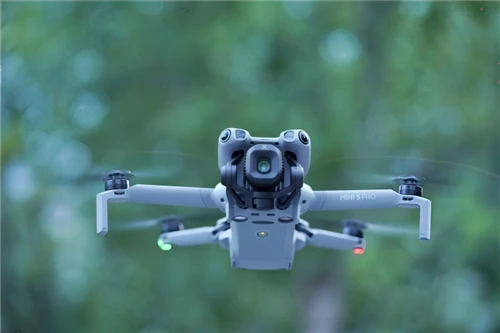
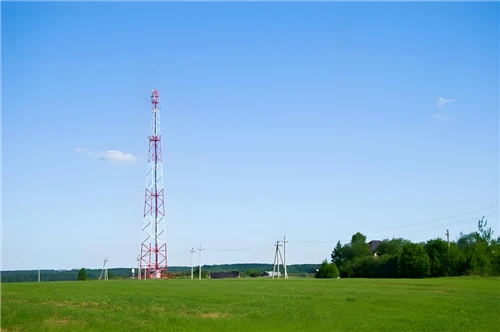
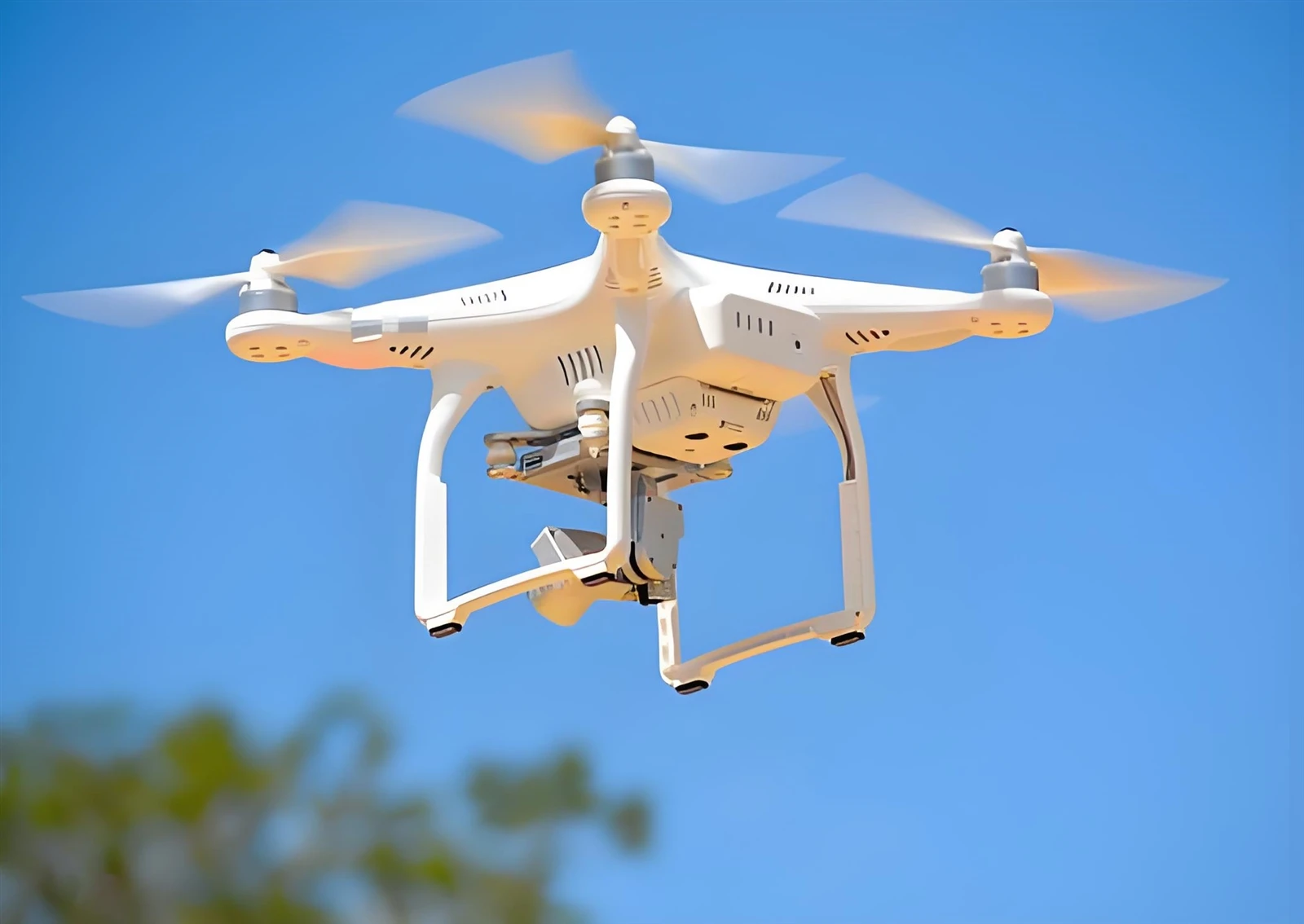
Unmanned aerial vehicle detection equipment is a type of technical equipment specifically designed for discovering, identifying, locating, tracking, and even counteracting unmanned aerial vehicles. With the popularization of unmanned aerial vehicle technology and the expansion of its application scenarios, it not only brings convenience but also poses potential risks, such as interfering with flights near airports, conducting unauthorized filming in sensitive areas, transporting prohibited items, or infringing upon personal privacy. The emergence of unmanned aerial vehicle detection equipment has become a key technical means for maintaining the safety of low-altitude airspace and ensuring the order of important places.

First, the main application of unmanned aerial vehicle detection equipment
The application scenarios of unmanned aerial vehicle detection equipment are very extensive. The core purpose is to achieve effective perception and control of unmanned aircraft activities within a specific airspace.
1. Security protection for important facilities and places: This is currently the most significant application area. For instance, around airports, it is necessary to strictly prevent drones from entering to avoid collisions with the taking-off and landing aircraft, which could lead to serious safety incidents. Key infrastructures such as nuclear power plants, chemical plants, dams, and power stations also need to guard against drones conducting surveillance or causing damage. During large-scale public events like sports competitions, star concerts, and important conferences, using unmanned aerial vehicle detection equipment can prevent unauthorized aerial photography from disrupting the order of the event or posing safety risks.
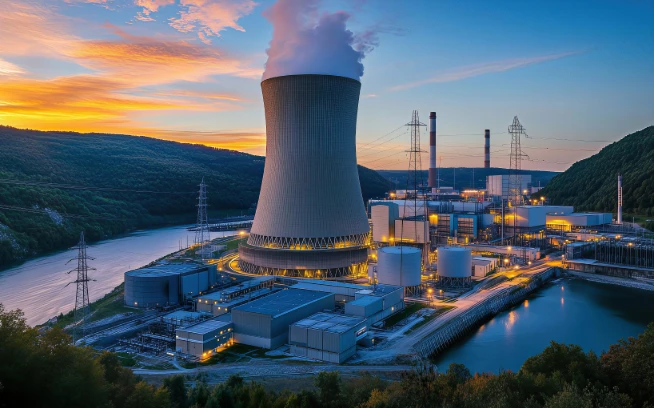
2. Preventing Information Leakage and Privacy Infringement: Some research institutions, research parks of high-tech enterprises, and factory areas involving trade secrets need to prevent drones from conducting surveillance and intelligence gathering from the air. Similarly, private residential areas may also use such devices to prevent unauthorized photography by drones and protect personal privacy.

3. Maintaining public safety and law enforcement: During large public events, unmanned aerial vehicle detection equipment can assist security personnel in promptly identifying any abnormal situations in the air. In prisons and other regulatory facilities, it can prevent the delivery of prohibited items by drones. At borders or specific areas, it can be used to monitor the activities of illegal border-crossing drones.
4. Countermeasures and Disposal of Illegal Drones: Many drone detection systems incorporate both detection and countermeasures functions. After detecting an illegal or suspicious drone, various technical means such as radio interference and navigation signal deception can be employed to force the drone to return, land, or hover, thereby gaining time for subsequent disposal. This method is safer and less likely to cause secondary disasters compared to traditional physical destruction methods (such as using net guns, lasers, etc.).
5. Airspace Management and Traffic Monitoring: As urban air transportation (such as cargo drones and air taxis) develops in the future, it will be inevitable to conduct regular monitoring and management of the low-altitude airspace. unmanned aerial vehicle detection equipment can serve as an important part of the low-altitude surveillance network, ensuring the orderly operation of various aircraft and preventing air traffic accidents.
Second, the technical features of unmanned aerial vehicle detection equipment
The unmanned aerial vehicle detection equipment integrates multiple technologies. Equipment following different technical routes have their own characteristics. Usually, the system will adopt the combined use of multiple technologies to complement each other's strengths and improve the accuracy and reliability of detection.
1.Radio spectrum detection
(1) Working principle: By receiving and analyzing the wireless signals (such as video transmission signals and remote control signals) exchanged between the drone and the remote controller to identify the drone. Each drone has its specific communication frequency band and signal characteristics (i.e., "fingerprint"), and the system can identify the drone model by comparing it with the database.
(2) Main features:
- The detection range is relatively far, usually up to several kilometers.
- It can conduct passive listening without revealing its own position, with good concealment.
- It can not only detect the drone but also locate the position of the remote controller, which is helpful in finding the operator.
- It can effectively detect even silent, low-light or small drones as long as they have radio communication.
- In complex urban environments, wireless signals are easily blocked and interfered by buildings.
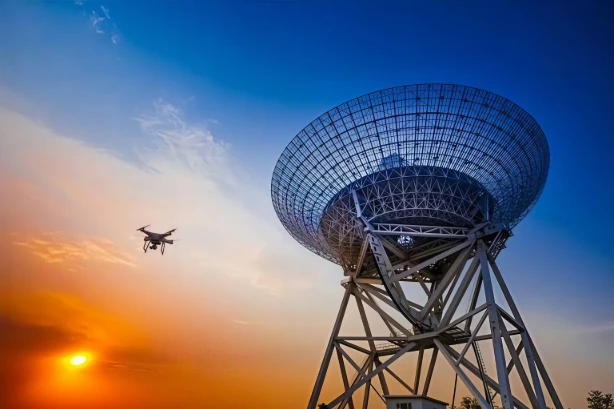
2. Radar detection
(1)Working principle: Similar to traditional air defense radars, it actively emits electromagnetic waves and receives the echoes from the targets. By analyzing the echoes, it can detect the distance, speed and direction of the targets.
(2)Main features:
- High detection accuracy, capable of continuously tracking the target trajectory and unaffected by weather and light conditions.
- Also effective for autonomous flying drones without radio signal transmission.
- Can effectively distinguish between birds and drones (by analyzing the radar cross-section and movement patterns).
- Traditional radars have weak detection capabilities for low-altitude, slow-moving and small targets (such as consumer-grade drones), and dedicated low-small-slow target radars are costly.
- It is an active detection method, and its own position may be exposed.
3. Photoelectric Identification (Visible Light/Infrared)
(1)Working Principle: Utilizing high-resolution optical cameras and infrared thermal imagers to scan the airspace, and through image recognition algorithms, automatically identify and lock onto the drone targets.
(2)Main Features:
- It can provide intuitive visual evidence to confirm the model, appearance, and payloads of the drone.
- Infrared thermal imaging can still function effectively during nighttime or in hazy weather, by detecting the heat sources of the drone's motor and battery to locate the target.
- The effective range is limited by weather conditions and the performance of the optical lens, and is usually used as an auxiliary confirmation method, combined with radar or radio detection.
- The pure image recognition algorithm may have false alarms in complex backgrounds (such as birds, kites).
4. Acoustic Detection
(1)Working Principle: By arranging an array of microphones, the unique noises generated by the drone's rotors and motors are collected. The noises are compared to identify and locate the drone.
(2)Main Features:
- Relatively low cost and flexible deployment.
- Not affected by visual obstructions or radio silence.
- The detection range is relatively close, usually within one kilometer, and environmental background noises (such as traffic and wind sounds) can significantly affect its performance.
- More suitable for indoor environments, quiet parks, or as a final close-range defense line.
Third, Frequently Asked Questions
Question1: Can the unmanned aerial vehicle detection equipment detect all unmanned aircraft with 100% accuracy?
Answer: No single technology can guarantee a 100% detection rate. The real environment is complex and variable. For instance, extremely silent unmanned aircraft and those that take special measures for concealment (such as flying close to the ground or using buildings for cover) can all increase the difficulty of detection. Modern advanced unmanned aircraft detection systems all adopt the "fusion detection" concept, combining various technologies mentioned above. They use radar for wide-area search and tracking, employ radio detection for identification and operator location operations, and then use optical and electronic equipment for final confirmation and evidence collection. This greatly improves the overall detection probability and reliability of the system.
Question2: Will these devices cause interference to other electronic devices or communication systems?
Answer: The regular unmanned aerial vehicle detection equipment, especially the detection units (such as radio interception, radar, and optical-electrical systems), are designed in strict accordance with electromagnetic compatibility standards. Their operating frequency bands and power are strictly regulated. Generally, they do not cause interference to public communications (such as mobile phones, Wi-Fi). However, the countermeasure units integrated in the system (such as radio jamming devices) will emit interference signals in a targeted manner. This will temporarily block the control link and video transmission of the drone in a specific direction and frequency band. The use of countermeasure functions requires authorization under laws and regulations and must be operated by professionals to avoid unnecessary interference to surrounding legal radio services.

Question3: Can ordinary individuals or communities install and use such devices?
Answer: This requires extreme caution. The unmanned aerial vehicle detection equipment itself may be classified as a special device, and its sale and use may be subject to regulations. More importantly, devices with active countermeasures (interference) have a relatively high power of radio signals emitted. No individual or entity has the right to privately set up and use radio interference equipment without authorization; otherwise, it will disrupt the order of airwaves and may be considered illegal. For privacy protection needs, it is recommended to solve them through physical shielding, legal protection, etc. For the security needs of important places, one should consult qualified professional security companies and apply and deploy in accordance with laws and regulations.
Question4: How will the future unmanned aerial vehicle detection technology develop?
Answer: The main trends of future development lie in greater intelligence, networking, and multi-functional integration. Artificial intelligence and deep learning algorithms will be more widely applied in signal recognition and target classification to reduce false alarms and predict the flight intentions of drones. Through networking technology, scattered detection nodes will be connected to form a large-scale collaborative surveillance network, eliminating single-point blind areas. The system will integrate more efficient and precise soft-kill countermeasures (such as precise deception takeover), and explore integration with drone traffic management systems to achieve dual capabilities of serving cooperative drones and handling non-cooperative drones.
In summary, unmanned aerial vehicle detection equipment is a necessary tool to address the double-edged sword effect of unmanned aerial vehicle technology. Through the synergy of multiple technical means, it has established a low-altitude airspace security defense line from early warning, identification to disposal. With the continuous advancement of technology and the deepening of application scenarios, such equipment will play an increasingly important role in ensuring public safety, protecting privacy, and maintaining airspace order.
Disclaimer: This article is for reference only and does not provide legal or practical advice regarding unmanned aerial vehicle detection equipment. The usage regulations for unmanned aerial vehicle detection equipment vary by region, and actual deployment must comply with local laws and be carried out by authorized professional organizations.
We are a Chinese manufacturer. If you need unmanned aerial vehicle detection equipment, please contact us at info@alasartech-security.com.