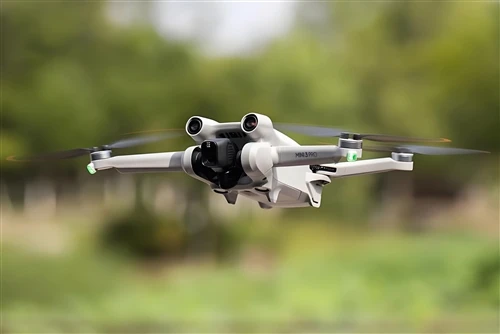
In today's society, unmanned aerial vehicle (UAV) technology is developing rapidly. Small civilian UAVs have been widely applied in multiple fields such as aerial photography, logistics, agriculture, and rescue, bringing numerous conveniences to our lives. However, with the sharp increase in the number of drones, incidents of unauthorized and unauthorized "black flights" of drones entering no-fly zones have emerged one after another, posing a serious threat to national security, public security and personal privacy. To effectively address this challenge, drone countermeasures have emerged and become an important tool for ensuring low-altitude safety. This article will delve deeply into the definition and working principle of drone countermeasure equipment.
First, the definition and classification of drone countermeasure equipment
Drone countermeasure equipment, also known as anti-drone systems or drone control devices, is a type of equipment specifically designed to monitor, identify, interfere with, deceive, and even destroy illegally invading drones. Its main purpose is to protect the security of important areas, prevent drones from illegally entering sensitive areas, and ensure the safety of personnel and facilities. According to the differences in working principles and application scenarios, drone countermeasure equipment can be classified into the following categories:
1. Detection equipment: such as radar, photoelectric, acoustic, etc. Radar detects the position and speed of unmanned aerial vehicles by emitting electromagnetic waves, featuring a wide detection range and high precision. The photoelectric equipment utilizes optical and infrared technologies to visually observe the shape and flight status of the unmanned aerial vehicle. Acoustic detectors detect targets by listening to the sounds produced by drones during flight.
2. Interference devices: Mainly block the communication link between the unmanned aerial vehicle and the remote control as well as the satellite positioning signal by transmitting interference signals. Common interference methods include full-band interference and directional interference, etc. Full-band interference can interfere with all frequency bands used by drones, but it may have a certain impact on the surrounding communication equipment. Directional interference can concentrate the interference signal in a specific direction, reducing the interference to other devices.
3. Deception equipment: By simulating the signals of the drone remote control or satellite positioning signals, it lures the drone to land or return. This approach is relatively gentle and will not cause damage to the drone, but it requires a thorough understanding of the drone's communication protocol and positioning system.
4. Physical capture equipment: Utilizing physical means such as mesh objects, sticky substances or mechanical arms to directly capture unmanned aerial vehicles. This approach is suitable for scenarios where drones need to be recovered or subsequent analysis conducted.

Second, the working principle of the drone countermeasure equipment
The working principle of unmanned aerial vehicle (UAV) countermeasures mainly relies on technical means such as signal interference, signal spoofing, and physical capture. Take signal interference as an example. When the drone countermeasure equipment detects an illegally invading drone, it will emit interference signals of specific frequencies. These signals will interfere with the communication and navigation systems of the drone, causing it to lose control or be unable to perform its mission. Specifically, interference signals can block the communication link between the drone and the remote control, preventing the drone from receiving operation instructions. Or interfere with the satellite positioning signal of the unmanned aerial vehicle, making it unable to accurately determine its own position.
Signal spoofing technology involves simulating the signals from legitimate drone remote controls or satellite positioning signals to induce drones to fly or land along preset trajectories. This approach requires a thorough understanding of the communication protocols and positioning systems of unmanned aerial vehicles (UAVs) in order to accurately simulate signals and guide UAVs.
Physical capture technology is to directly capture unmanned aerial vehicles by physical means. For instance, a mesh catcher can quickly unfold and wrap around the drone, preventing it from continuing to fly. Sticky substances can adhere to the surface of unmanned aerial vehicles, reducing their flight capabilities. In addition, some advanced physical capture devices are also equipped with mechanical arms and intelligent recognition systems, which can automatically capture and identify different types of unmanned aerial vehicles.
Third, the Application and significance of unmanned aerial vehicle countermeasures technology in national defense construction
In national defense construction, unmanned aerial vehicle (UAV) countermeasures technology plays a crucial role. With the continuous development of unmanned aerial vehicle (UAV) technology, UAVs have become an important means of reconnaissance and strike in modern warfare. To ensure the safety of military facilities and the smooth progress of combat missions, effective measures must be taken to prevent the threat of unmanned aerial vehicles.
Take the conflict between two countries as an example. Both sides have extensively used drones for reconnaissance, strikes and other tasks. To counter the threat posed by drones, the military of a certain country has widely employed advanced drone countermeasure equipment. These devices can monitor the flight trajectory and position information of drones in real time. Through means such as signal interference and deception, they effectively block the communication link and satellite positioning signal between the drone and the remote control, causing the drone to lose control or be forced to land. This measure not only ensures the security of the military facilities of a certain country, but also provides strong support for the smooth progress of combat missions.
Drone countermeasure technology is also widely applied in the security protection of key areas such as military bases, airports, and nuclear power plants. Once these areas are illegally invaded by drones, it may trigger serious security accidents and strategic risks. By deploying drone countermeasure equipment, illegal invading drones can be monitored and intercepted in real time, ensuring the safety and stable operation of key facilities.
In addition, drone countermeasures technology can also be used to combat illegal activities that use drones as carriers. For instance, some lawbreakers use drones to carry out illegal activities such as drug transportation and smuggling. Through drone countermeasure equipment, these illegal drones can be monitored and intercepted in real time, effectively curbing the occurrence of illegal activities.
Fourth, Future Outlook
With the continuous development of unmanned aerial vehicle (UAV) technology and the continuous expansion of its application scenarios, UAV countermeasures will also be constantly upgraded and improved. In the future, drone countermeasures will become more intelligent, integrated and portable. For instance, by introducing artificial intelligence and machine learning technologies, drone countermeasure equipment can automatically identify the type, model and flight intention of the drone, and automatically select the best countermeasure strategy based on different situations. In addition, integrating multiple detection and countermeasure methods into a single device can enhance the overall performance and utilization efficiency of the equipment. Meanwhile, portable drone countermeasures will be more convenient to carry and deploy, and are suitable for scenarios such as fieldwork and mobile security.
Fifth, Conclusion
Drone countermeasure equipment, as an important tool for ensuring low-altitude safety, plays a crucial role in national defense construction, public security and personal privacy protection. We are a custom manufacturer of anti-drone equipment in China. We have a variety of anti-drone equipment for you to choose from or customize. If you have any requirements, please contact us at info@alasartech-security.com.