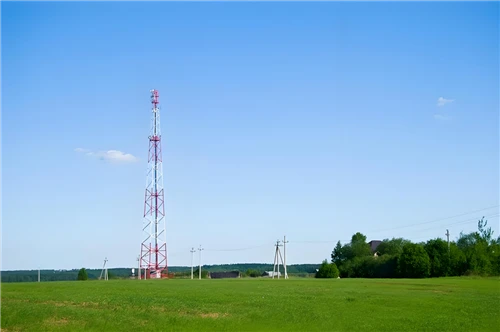
In today's era of rapid technological advancement, drones have transformed from an unattainable military high-tech to a common technological product in our daily lives. Whether it is aerial photography of beautiful scenery, agricultural monitoring, emergency rescue or logistics distribution, drones have demonstrated their broad application prospects. However, with the widespread use of drones, how to effectively detect and manage these "little fairies" in the air and ensure that they do not pose a threat to public safety has become a new topic. Today, let's explore the technological mysteries of Drone detection equipment together.
The importance of Drone detection equipment
Drone detection equipment, as the name suggests, is a special device used for detecting, identifying and tracking unmanned aerial vehicles. With the continuous development of drone technology, some unauthorized drones may invade sensitive areas such as airports, government buildings, and sports venues, posing a potential threat to public safety. Therefore, having efficient and accurate Drone detection equipment is of great significance for maintaining air safety and preventing malicious interference.

The working principle of Drone detection equipment
The working principles of Drone detection equipment are diverse, mainly including radar detection, radio frequency (RF) scanning, acoustic detection, and photoelectric/infrared (EO/IR) detection, etc.
Radar detection: Radar is one of the traditional methods for detecting unmanned aerial vehicles. It detects the position, speed and direction of unmanned aerial vehicles by emitting radio waves and receiving the reflected signals. Radar detection has advantages such as long detection range and being unaffected by weather conditions. However, for small unmanned aerial vehicles (UAVs) or those flying at low altitudes, its detection effect may be somewhat limited.
Radio frequency (RF) scanning: During the flight of a drone, it communicates with a remote control or ground station, transmitting and receiving radio signals. By scanning these radio frequencies, detection devices can identify and locate unmanned aerial vehicles. RF scanning is particularly effective in detecting drones that are communicating, but if the drone is in autonomous flight mode and does not emit radio signals, it may not be detected.
Acoustic detection: Acoustic detection equipment detects the presence of drones by capturing the sounds they produce during flight. This method works well at close range, but is greatly affected by environmental noise and distance.
Photoelectric/infrared (EO/IR) detection: Photoelectric and infrared detectors can identify drones by capturing their visual or infrared features. This method works both during the day and at night and is helpful for identifying the type and size of drones.
Technological innovation of Drone detection equipment
With the continuous development of unmanned aerial vehicle technology, Drone detection equipment is also constantly innovating. Some advanced detection devices have achieved multi-sensor fusion, combining multiple technologies such as radar, RF scanning, acoustic detection, and photoelectric/infrared detection to enhance the accuracy and reliability of detection.
Furthermore, the application of artificial intelligence and machine learning technologies has also made the Drone detection equipment more intelligent. By training algorithms to identify the features and behavioral patterns of unmanned aerial vehicles (UAVs), detection devices can more accurately determine whether the target is a UAV and predict its flight trajectory.
The application prospects of Drone detection equipment
The application prospects of Drone detection equipment are broad. In the field of public security, it can be used for air security monitoring in sensitive areas such as airports, government buildings, and sports venues. In the military field, it can be used for tasks such as border patrol and battlefield reconnaissance. In the civilian field, it can be combined with the unmanned aerial vehicle (UAV) management system to achieve compliant flight and effective management of UAVs.
With the continuous expansion of the unmanned aerial vehicle (UAV) market and the continuous progress of technology, Drone detection equipment will also embrace greater development opportunities. In the future, we can look forward to the advent of more efficient, intelligent and portable Drone detection equipment, bringing more convenience and safety to our lives.
Conclusion
Drone detection equipment, as an important tool for maintaining air safety, its technological mysteries deserve our in-depth exploration. By understanding its working principle, technological innovation and application prospects, we can have a better understanding of this technological product and look forward to its greater role in the future. We are a custom manufacturer of unmanned aerial vehicle detectors in China. We have a variety of drone detection equipment for you to choose from and customize. For any needs, please contact us at info@alasartech-security.com.