In the security area protection, radio interference equipment technology plays an important role, it is mainly used to transmit specific frequency radio waves to interfere with the communication link, navigation signal or control signal of UAV or other radio equipment, in order to weaken, block or even control the operation of these equipment. The following is a detailed analysis of radio interference equipment technology:
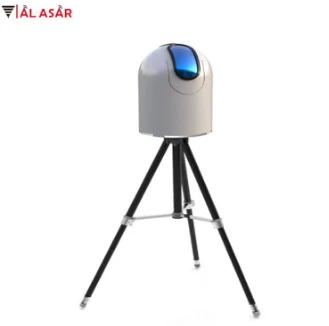
First, the working principle
Based on electromagnetic compatibility (EMC) theory, radio interference equipment generates interference signals matching the frequency band of the target system by means of spectrum overlap and signal modulation. These interference signals can cover and interfere with the communication frequency band of the UAV, including GPS navigation frequency band, Wi-Fi control frequency band, special remote control frequency band, etc., so as to achieve effective interference with the UAV.
The radio jamming equipment transmits high-power jamming signals in an omnidirectional/directional manner to implement omnidirectional or sector interference on the target UAV, forming an electronic fence ring, blocking the communication link and navigation link between the UAV and the operator, making it unable to fly normally, resulting in the control effect of returning, forced landing and hovering.
Two, the main components
1. Signal generator: responsible for generating the required frequency and power of the interference signal, is the core component of the equipment.
2. Power amplifier: used to enhance the power of the interference signal to ensure that the signal can cover the target area to achieve the purpose of effective interference.
3. Antenna system: the interference signal is radiated out in a specific direction to improve the interference efficiency and directivity. An antenna system may include multiple antenna units to achieve omnidirectional or directional coverage.
4. Control system: including processor, display screen and buttons, etc., for setting interference parameters (such as frequency, power), monitoring equipment status and user interaction. The control system may also have an intelligent servo system, which can achieve precise control of interference signals.
5. Power supply system: Provide stable and reliable power support for the entire equipment to ensure long-term stable operation of the equipment.
6. Cooling system (optional) : For high-power equipment, it is used for heat dissipation to ensure the stability and reliability of the equipment under long-term operation.
Third, interference signal generation technology
The generation of interference signals depends on advanced signal processing techniques, including but not limited to direct frequency synthesis (DDS), frequency hopping, spread spectrum, etc. By precisely controlling the frequency, bandwidth, modulation mode and other parameters of the signal, customized interference signals for different UAV communication protocols can be generated to improve the pertinence and effectiveness of interference.
Four,frequency band selection and switching capability
Due to the wide range of frequency bands used by UAVs, radio jamming equipment needs to have flexible frequency band selection and switching capabilities, which can quickly respond and adapt to different frequency bands of UAVs. This is usually done through a preset band list, automatic scanning, or manual Settings.
Five,performance evaluation and testing
The equipment performance evaluation mainly starts from the interference range, interference efficiency, response time, stability, portability and so on. Effective evaluation methods include laboratory testing, field measurement and user feedback collection. The evaluation results will directly affect the use effect and market competitiveness of the equipment.
Six,application scenarios and compliance
Radio jamming equipment is widely used in military defense, public security, aviation control, anti-terrorism and counter-violence and other fields. For example, preventing drones from trespassing around airports and securing airspace during major events. However, the use of radio jamming equipment requires strict compliance with relevant laws and regulations to avoid unnecessary interference with legitimate radio communications. At the same time, the device should have a safety mechanism to prevent misoperation and overload protection to ensure security and reliability during use.
Vii. Development Trend
With the continuous development and popularization of UAV technology, radio jamming equipment will also develop in the direction of intelligence, integration and high efficiency. In the future, the equipment will pay more attention to the integration of multi-band and multi-mode interference capabilities, and improve the adaptability to different types of UAVs. At the same time, with the increasing complexity of the electromagnetic environment, the equipment also needs to have stronger anti-interference ability and adaptability to ensure that it can still work effectively in a complex electromagnetic environment.
To sum up, radio interference equipment plays an important role in the protection of security areas, through advanced technical means and flexible frequency band selection and switching capabilities, to achieve effective interference and control of radio equipment such as drones. However, it is necessary to strictly abide by relevant laws and regulations and safety norms during use to ensure the safety and compliance of the equipment.