Selecting a mobile phone signal shielding solution for prisons is a complex project that involves aspects of security, technology and regulations. The core concept is to upgrade from the broad approach of "signal suppression" to a more precise "signal control", while strictly ensuring legal compliance throughout the entire process.
Step 1: From "What to Block" to "What to Achieve"
Before selecting a specific plan, it is recommended to clearly define two core requirements:
Target Area: Is it necessary to block all indoor areas such as cells and corridors, or should it also cover outdoor activity areas and the surrounding areas of the fence? Generally, the indoor areas are the main focus for blocking, while the outdoor areas serve as supplementary.
Control Method: Is it necessary to implement a "one-size-fits-all" full-blocking approach, or should there be a more refined "selective control" - for example, while blocking the illegal mobile phones of inmates, it is also necessary to ensure that the police communication devices of prison guards can communicate normally.
Step 2: Understand the two main solutions
Currently, there are mainly two types of solutions, which can be chosen based on your needs and budget:
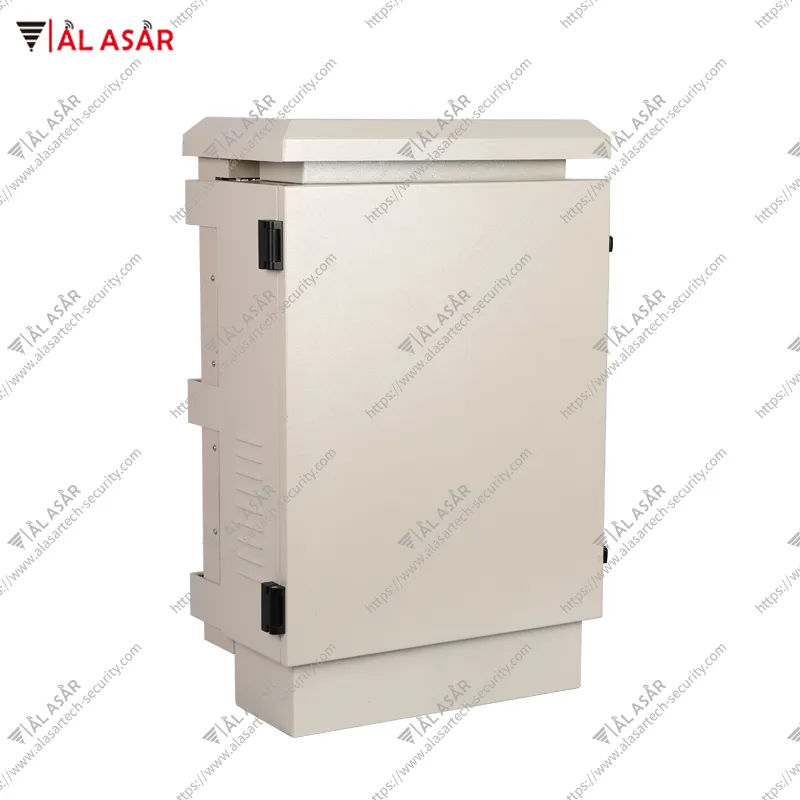
Solution 1: Traditional signal blocker. By emitting high-power interference signals, it blocks all mobile phone communications. The advantage is that the cost is low and installation is simple. The disadvantage is that it equally blocks all signals, which may affect legal communications; and the high-power signals may also overflow and interfere with surrounding base stations, posing compliance risks. This solution is suitable for scenarios with limited budgets or where only short-term blocking is needed.
Option Two: Intelligent Detection and Blocking System. As the more advanced solution at present, it mimics a legitimate base station, accurately identifying the identity of each mobile phone, blocking "blacklist" devices at the "protocol level", allowing "whitelist" devices (such as police communication devices) to pass through, achieving precise control. The advantages are fine control, precise boundaries, and intelligent efficiency. The disadvantage is that it requires complex preliminary planning and has a relatively high initial investment. It is the mainstream choice for new construction or renovation projects.
Step 3: Key Points for Deployment and Installation
To ensure the effectiveness, it is recommended to pay attention to the following during the deployment and installation process:
First, conduct surveys, then design: Before deployment, use a spectrum analyzer to conduct a comprehensive survey of the signal strength both inside and outside the prison as the basis for the design.
Combine internal and external aspects, focus on breakthroughs: Adopt the strategy of "mainly using large-power equipment for extensive interference outside the prison, and supplementing with small-power equipment in the weakly shielded areas inside the prison". For the outdoor area, use directional antennas with high power to ensure that the signal is suppressed at the source. For the indoor area, deploy the equipment flexibly with low power.
Optimize antenna installation: The installation height is recommended to be between 2.5 and 3 meters. Pay attention to avoiding signal-blocking objects such as metal doors and windows. In areas with particularly strong signals, an additional reflection isolation board can be added to enhance the effect.
Step 4: Anticipate challenges and response strategies
After the system is launched, the common challenges and corresponding suggestions are as follows:
Signal overflow: If the boundaries are not strictly controlled, it may interfere with surrounding civilian communications. It is recommended to adopt technical measures such as using directional antennas, fine-tuning power, and adding signal reflection plates.
5G and Future Technology Challenges: Old equipment cannot effectively block 5G signals. Please choose an intelligent system that supports the full frequency band of 5G NR (such as n1/n28/n41/n78) and consider its future smooth upgrade capability.
Operator base station signals are too strong: Areas close to the base station may have blind spots. The "point frequency hopping spread spectrum technology" or "intelligent full frequency band shielding technology" should be adopted for targeted reinforcement.
Maintenance and Intelligent Operation Management: Over time, equipment may age or experience power drift. It is recommended to establish a maintenance system involving regular inspections and re-measurements of the electromagnetic environment. Additionally, it is advisable to opt for intelligent systems that offer remote start/stop capabilities, abnormal alarm functions, and a centralized management platform.
Step 5: Industry Trends and Forecasts
Prison signal control is evolving towards greater intelligence, greater precision, and greater sustainability:
Intelligence and Precision: Utilizing big data and AI, it enables automatic identification and dynamic power regulation, allowing the system to "adapt" to environmental changes.
Integrated Control Platform: Integrating functions such as signal shielding, personnel positioning, and video surveillance, it achieves information sharing and interconnection.
Energy Conservation and Environmental Protection: The new generation of intelligent equipment adopts more efficient power amplification technology, reducing the unit area power consumption by approximately 75% compared to traditional equipment.
Integration of detection and shielding: Future systems will seamlessly combine signal detection (such as scanners, detectors) with precise shielding to achieve "detection and then blocking" - an active defense mechanism.
Conclusion
In terms of scheme selection, the intelligent detection and shielding system represents the advanced direction, while traditional signal blockers are suitable for supplementing certain scenarios.
We are a manufacturer specializing in customizing prison signal jamming devices in China. We offer a variety of prison signal jamming devices for your selection or customization. If you have any requirements, please contact us at info@alasartech-security.com.