In the current era of rapid technological development, drones have been widely applied in various fields. However, this has also brought new challenges, that is, how to effectively monitor and counter these drones. Radar detection technology, as an important monitoring device, plays an indispensable role in countering unmanned aerial vehicles (UAVs) due to its outstanding performance and unique advantages.
First, the working principle of radar detection technology
The core of radar detection technology lies in its ability to emit electromagnetic waves and receive echoes to obtain target information. The radar system emits electromagnetic waves of specific frequencies into the surrounding space. When these waves encounter objects, some of them will be reflected back. The radar receiver then receives these reflected electromagnetic waves and infers the target's position, speed, shape and other features by analyzing parameters such as the time, frequency and amplitude of the echoes.
For targets like unmanned aerial vehicles (UAVs), their fuselages, wings and other parts will produce unique echoes when illuminated by electromagnetic waves emitted by radar. Due to the differences in size, shape and material between the unmanned aerial vehicle and its surrounding environment, these echo signals also have distinct characteristics. By processing and analyzing these echo signals, the radar system can accurately identify the presence of unmanned aerial vehicles and obtain their relevant parameters.
Second, classification of radar detection technology
1. Pulse radar
Pulse radar determines the distance to a target by emitting short pulse electromagnetic waves and measuring the echo time delay. It features excellent ranging accuracy and detection range, making it highly suitable for monitoring long-range unmanned aerial vehicles.
2. Continuous Wave radar
Continuous wave radar continuously emits electromagnetic waves in the form of sine waves and acquires the velocity information of the target by measuring the frequency difference or phase difference between the emitted wave and the echo. This type of radar is very useful in countering unmanned aerial vehicle (UAV) monitoring because it can track the flight speed and movement trajectory of UAVs in real time.
3. Phased array radar
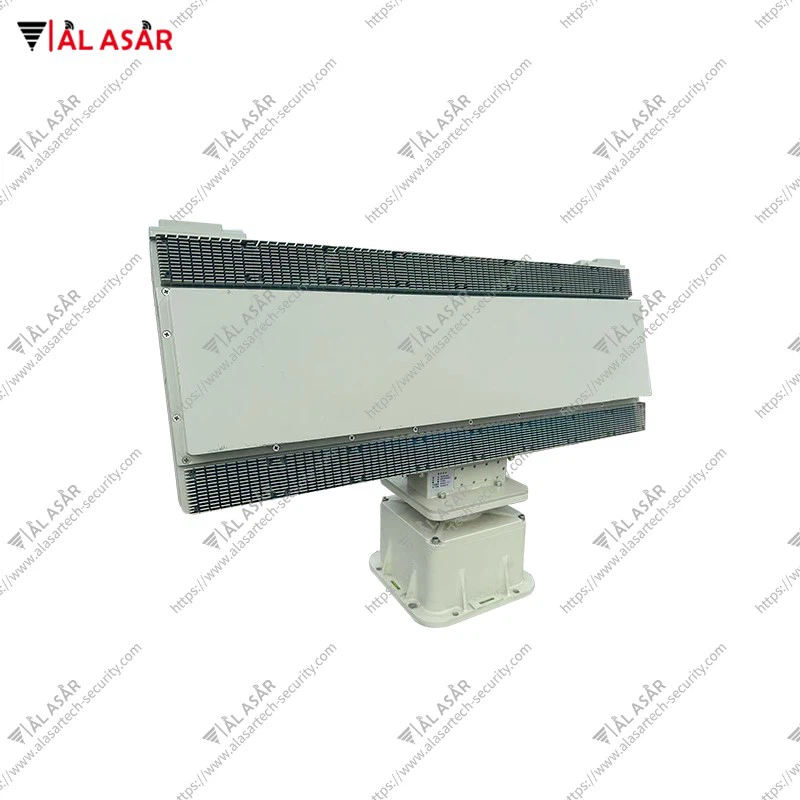
Phased array radar achieves rapid beam scanning by controlling the phase and amplitude of each unit in the antenna array. It can monitor multiple targets simultaneously and respond promptly, capable of quickly capturing the sudden appearance and rapid movement of drones.
Third, the advantages of radar detection technology
1. Long-distance detection capability
Radar can detect unmanned aerial vehicles within a range of tens of kilometers or even further, providing ample time for early warning.
2. All-weather working capability
The radar is not affected by weather conditions. Whether it is rainy, foggy or at night, it can maintain a normal working state to ensure continuous monitoring of unmanned aerial vehicles.
3. High-precision measurement
Radar can provide precise information such as the position, speed and altitude of unmanned aerial vehicles, which is helpful for accurately predicting their flight trajectories and assessing the degree of threat.
4. Multi-target monitoring capability
Radar can simultaneously monitor multiple drone targets and is highly suitable for dealing with large-scale drone swarm attacks.
Fourth, an example of the application of radar detection technology in countering unmanned aerial vehicles - Border control
Radar technology plays a crucial role in border control. It can monitor and warn of illegally invading drones in real time, thereby effectively preventing espionage activities and the transportation of illegal items. In addition, for important facilities such as military bases, nuclear power plants and airports, radar can also promptly detect approaching drones and take necessary countermeasures to ensure the safety of the facilities. In urban environments, radar systems can also work in coordination with other monitoring devices to build a comprehensive unmanned aerial vehicle (UAV) monitoring network, providing strong support for the maintenance of public safety and social order.
However, radar detection technology also faces many challenges in countering the application of unmanned aerial vehicles. With the miniaturization of unmanned aerial vehicles (UAVs) and the development of stealth technology, the cross-sectional area of their radar reflection has gradually decreased, which has brought difficulties to detection. Meanwhile, the complex electromagnetic environment and building reflections in urban Settings may also affect the performance and detection accuracy of radar. In addition, the cost of the radar system and the technology and resources required for its deployment and maintenance are also factors that cannot be ignored.
Facing these challenges, researchers and engineers are constantly making technological innovations and improvements. They are committed to enhancing the sensitivity and resolution of radar and optimizing signal processing algorithms to strengthen the detection capabilities for small and stealth targets. Meanwhile, by integrating other monitoring methods such as optical sensors and acoustic sensors, multi-source information fusion is achieved, further enhancing the reliability and accuracy of the monitoring system.
Fifth, Conclusion
In conclusion, radar detection technology plays an indispensable role in countering unmanned aerial vehicle (UAV) monitoring. With the continuous advancement and innovation of technology, it will continue to play a significant role in safeguarding national security, public security and domain security, and constantly adapt to new challenges and demands.
We are a custom manufacturer of radar unmanned aerial vehicle detection systems in China. We have a variety of radar unmanned aerial vehicle detection equipment for you to choose from and customize. If you have any requirements, please contact us at info@alasartech-security.com.