Today, with the rapid development of drone technology, drones have been widely applied in various fields, from aerial photography of beautiful scenery to agricultural plant protection, from logistics delivery to emergency rescue, bringing numerous conveniences to our lives. However, with the sharp increase in the number of drones, some safety hazards have gradually emerged. For instance, problems such as drones illegally entering sensitive areas, disrupting aviation order, and infringing upon privacy occur from time to time. To address these challenges, drone countermeasures have emerged as an important technological tool for safeguarding sky security.
Drone countermeasure equipment is a type of device specifically designed to interfere with, block or control drones.
It interferes with the remote control, navigation or video transmission system of the unmanned aerial vehicle (UAV) by transmitting signals of specific frequencies, thereby forcing the UAV to land, return or lose control (operated by professionals under legal and compliant conditions).
The working principle of the drone countermeasure equipment is mainly based on signal interference technology.
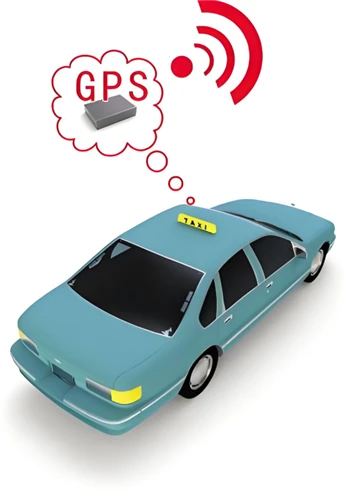
The unmanned aerial vehicle communicates with the remote control via radio waves, including control signals and image transmission signals. The countermeasure can identify and emit interference signals with the same or similar frequencies as these signals, preventing the unmanned aerial vehicle from accurately receiving instructions or transmitting images, thereby disrupting its normal flight state. In addition, some advanced countermeasures also have navigation deception functions. By simulating false GPS signals, they guide drones to fly away from the target area or land at designated locations.

Depending on the application scenarios and requirements, drone countermeasures can be classified into various types such as portable, fixed and vehicle-mounted ones.
The portable countermeasure is small in size and light in weight, making it easy to carry and operate. It is suitable for individual combat or small-scale protection. Fixed countermeasures are installed in specific locations, such as airports, government buildings and other sensitive areas, providing long-term and stable protection. The vehicle-mounted countermeasure combines mobility and protection capabilities, making it suitable for large-scale patrols and rapid response.
The application scenarios of drone countermeasure equipment are very extensive.
At the airport, it can prevent drones from interfering with flight take-offs and landings, ensuring aviation safety.
In large-scale events such as sports events and concerts, it can prevent drones from secretly taking pictures or interfering with the progress of the activities.
In the military field, it can be used to defend against the reconnaissance and attack of enemy drones.
In the field of public security, it can assist the police in tracking down and capturing operators of illegally flying drones.
However, the use of drone countermeasures also faces some challenges and limitations. First of all, the countermeasure must identify the target drone to avoid interfering with the surrounding legal radio equipment. Secondly, the use of countermeasures must comply with relevant laws and regulations to ensure that it is carried out under the premise of legality and compliance. In addition, with the continuous advancement of drone technology, countermeasures also need to be constantly updated and upgraded to meet the challenges posed by new types of drones.
To ensure the effectiveness and safety of the drone countermeasure equipment, its research and development and production processes need to follow strict standards and norms.
R&d personnel need to have a deep understanding of the communication protocols, frequency ranges and other aspects of unmanned aerial vehicles in order to design efficient and accurate interference signals. Meanwhile, the countermeasure also needs to undergo strict testing and verification to ensure that it can work stably and reliably in various environments.
In practical applications, drone countermeasures are often combined with other security systems to form a multi-level protection system. For instance, at airports, countermeasures can be combined with radars, photoelectric detection systems, etc., to achieve early detection, tracking and handling of unmanned aerial vehicles. In large-scale events, countermeasures can be combined with the patrols and surveillance of security personnel to ensure the smooth running of the event.
With the popularization of unmanned aerial vehicle (UAV) technology and the expansion of its application fields, the importance of UAV countermeasure equipment is increasingly prominent. In the future, with the continuous advancement of technology and the continuous expansion of application scenarios, drone countermeasure equipment will become more intelligent and precise. For instance, through artificial intelligence and machine learning technologies, countermeasures can automatically identify and classify drones, and adopt different disposal strategies based on the type and behavior of the drones. Meanwhile, the countermeasure can also communicate with the unmanned aerial vehicle (UAV) to achieve remote control and command issuance, further enhancing the efficiency and accuracy of handling.
In conclusion, as an important technological tool for safeguarding sky security, drone countermeasures play a significant role in maintaining public safety and ensuring aviation order. With the continuous advancement of technology and the continuous expansion of application scenarios, we have every reason to believe that drone countermeasures will play an even more important role in the future, bringing more safety and convenience to our lives. We are a custom anti-drone manufacturer in China, with a wide range of anti-drone equipment for you to choose from and customize. If you have any requirements, please contact us at info@alasartech-security.com.