Problems related to signal blockers (also known as signal disruptors) are quite common. Understanding their working principle, shielding range and legal regulations can help us correctly perceive these devices. The core working principle is to emit extremely strong interference noise at specific frequencies. This noise will "overwhelm" normal communication signals, preventing devices such as mobile phones and routers from establishing stable connections with base stations or signal sources, thereby achieving the effect of signal shielding.
Which signals a signal blocker can shield depends entirely on its design purpose and power level. It can be specifically classified into the following two categories:

First, common blocked signals (the main targets of civilian-level shielding devices)
The design purpose of civilian-level shielding devices is mostly to protect against the frequent public communication and wireless network signals encountered in daily life. The following are the main types of signals:
1. Public mobile networks (2G, 3G, 4G, 5G)
This is the core target of the blocker. It can cover all the communication frequency bands commonly used by mobile phones. After being blocked, the phone will display a "no service" or "only emergency calls allowed" status. It will be unable to make calls, send text messages, or use mobile data for internet access. Since different communication standards (such as GSM, CDMA, WCDMA, LTE, NR) correspond to different frequency bands, a full-frequency civilian blocker will cover all the frequency bands of these standards to ensure a complete blockage of the mobile phone signal.
2. Wi-Fi signals (2.4GHz, 5GHz, 6GHz)
The blocker will interfere with all the commonly used frequency bands of Wi-Fi. No matter which frequency band the device attempts to connect to, the signal will be interfered with, preventing a successful connection and ultimately resulting in the interruption of the wireless network, making it impossible to perform network operations such as web browsing and file transfer.
3. Bluetooth Signal (2.4GHz)
Bluetooth devices (such as Bluetooth headphones, Bluetooth keyboards, Bluetooth mice, Bluetooth speakers, etc.) all communicate using the 2.4GHz frequency band. Interference from the blocker on this frequency band will directly disrupt all Bluetooth connections, preventing devices from pairing properly and also preventing data transmission.
4. Satellite positioning signals (GPS, Beidou, GLONASS)
This type of signal shielding mainly targets the positioning function of devices. After the interference, devices such as mobile phones, vehicle navigation systems, and unmanned aircraft that rely on satellite positioning will be unable to obtain accurate location information and will be unable to perform navigation and location tracking functions.
Second, signals that special or high-power shielding devices may block
Apart from civilian-level shielding devices, some more powerful and targeted shielding devices (mostly for military use or specific law enforcement agencies) can also block the following special signals:
1. Radio walkie-talkie signal (such as UHF/VHF frequency bands)
This type of shield can interfere with the commonly used UHF (ultra-high frequency) and VHF (very high frequency) frequency bands of radio walkie-talkies, blocking the voice communication between walkie-talkies. It is commonly used in scenarios with extremely strict communication control requirements.
2. Remote control signals (such as those from drone remote controllers, specific remote control devices)
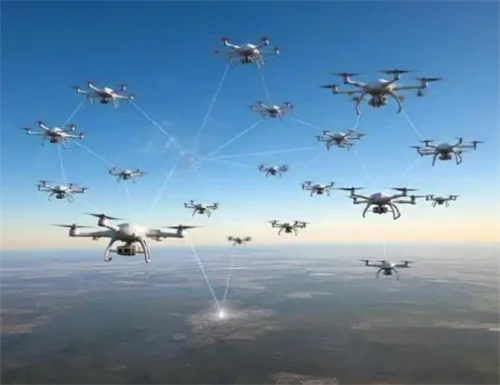
Can interfere with specific frequency bands used by drone remote controllers, certain remote-controlled bomb devices, etc., preventing the remote control equipment from sending instructions to the target. They are mainly used in special fields such as security prevention and counter-terrorism.
3. RFID/NFC Signals
These signals can be shielded. RFID (Radio Frequency Identification) and NFC (Near Field Communication) signals are commonly used in access cards, payment cards, and product electronic tags, etc. When shielded, they can prevent cheating through micro RFID/NFC devices. They are mostly applied in examination venues, confidential meetings, and other occasions that require strict control.
We are a Chinese manufacturer specializing in custom-made signal blockers. We offer a variety of signal interference devices for your selection and customization. If you have any requirements, please contact us at info@alasartech-security.com.