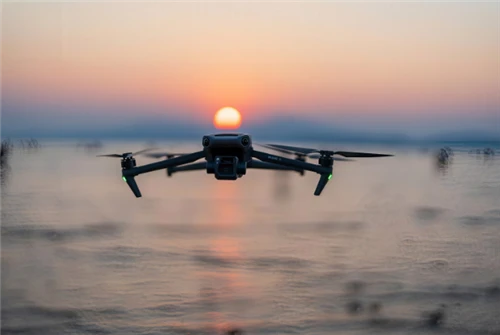
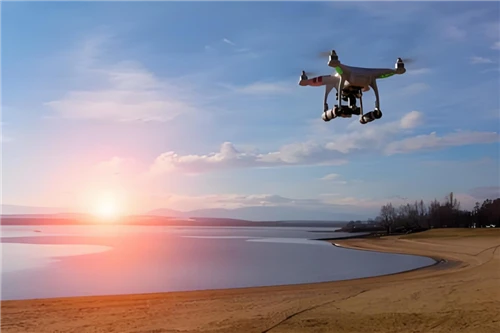
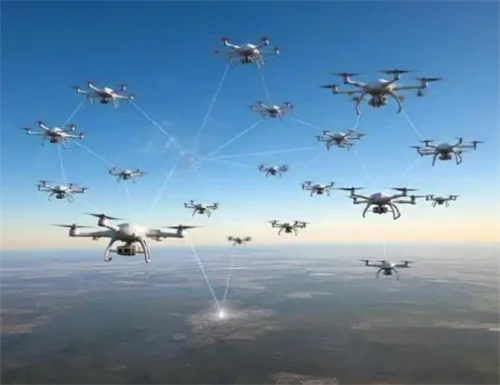
An unauthorized drone may enter airspace near an airport or approach government facilities, energy infrastructure, military bases, prisons, industrial parks, or large public events. In some cases, it can pose a direct threat to personnel safety and critical infrastructure. "detecting drones" is no longer the only requirement.
A more important question is: once a drone is detected, how can it be effectively dealt with legally, safely, and in a controlled manner? This is precisely why drone jamming systems have come into focus.

What is a drone jamming system?
Unmanned aerial vehicle (UAV) jamming systems are electronic countermeasures devices used to interfere with the communication or navigation signals of unmanned aerial vehicles (UAVs), and are an important component of modern counter-UAV systems.
A UAV typically does not operate entirely independently.
Depending on the UAV type, mission, and flight control architecture, it may rely on:
• Remote control and data link communication;
• GNSS satellite navigation;
• Telemetry link;
• Ground control station;
• Cellular or other wireless networks;
• Inertial navigation system;
• Visual navigation system;
• Airborne autonomous flight system.
Severe interference with any of these critical external signals can disrupt the normal operation of a drone.When the communication link between the drone and the operator is disrupted, the drone may be unable to receive effective control commands. Some drones may enter a hovering state; some may execute a return-to-home procedure; some may land automatically; and drones with strong autonomous capabilities may even continue to perform their missions relying on their onboard navigation systems.Therefore, when evaluating a drone jamming system, the truly important question is:"Can it reliably identify and effectively counter target drones under legal, controllable, and safe conditions, while minimizing the impact on surrounding normal communication and navigation systems?"This is the real problem that modern C-UAS technology needs to solve.
How do drone jamming systems work?
From a macro perspective, a mature counter-drone system typically follows this process:
Discover → Track → Identify → Judge → Decision → Countermeasure → Verify
Jamming devices are typically located in the "countermeasures" phase.The system must first determine the presence of drones in the airspace.
Common drone detection technologies include:
• radar;
• RF detection;
• electro-optical cameras;
• infrared sensors;
• acoustic sensors;
• multi-sensor fusion.
• Each sensor has its advantages.

For example, radar provides target motion information; RF detection can detect radio activity generated by drones; and electro-optical systems can help operators confirm targets. no single sensor can be 100% reliable in all environments.
Urban buildings, trees, weather, birds, and complex electromagnetic environments can all affect detection results. multi-sensor fusion is becoming an important development direction for modern C-UAS (Continuous Adaptive Systems).
What are the types of drone jamming techniques?
From a technical perspective, RF jamming can be classified in different ways.
1,Broadband Jamming: Broadband jamming targets a wider range of frequencies.Its advantage lies in its relatively wide coverage, without relying entirely on precise identification of the target's communication frequency. the wider the jamming range, the higher the risk of impacting legitimate wireless communications in the surrounding area. broadband jamming is not simply a matter of "the stronger the better."

2,Spot Frequency or Narrowband Jamming: Compared to broadband jamming, narrowband jamming is more focused on a specific frequency band.The advantage of this approach is its greater targeting and potential to reduce unnecessary spectrum impact.
If the target drone employs technologies such as frequency hopping, dynamic communication, or multi-link communication, single-band jamming may face greater challenges.
3,Multi-Band Jamming: Some counter-drone systems may simultaneously target multiple frequency bands.
This reflects an important trend: A continuous technological game is emerging between drones and counter-drone systems.
The more intelligent the drone, the stronger the perception and adaptation capabilities required by the countermeasure system.
What's the Difference Between Drone Jamming, GNSS Jamming, and Spoofing?
When discussing drone countermeasures, "jamming" and "spoofing" often appear together.they are not the same technology. Understanding the differences between them is fundamental to understanding drone electronic warfare technology.
1. RF Communication Jamming
RF jamming primarily targets wireless communication links.Drones typically need to exchange information with ground control stations or operators via radio links.If the communication link is severely jammed, communication quality may degrade, ultimately preventing the drone from reliably receiving or transmitting data.
Doodle Labs describes drone RF jamming as the intentional interference with communication signals between the drone and the operator, which can result in communication interruptions and reduced mission capabilities.From a counter-drone perspective, this means: Interfering with a drone's "communication capabilities" can be a means of disrupting its mission execution capabilities.

2. GNSS Jamming
GNSS jamming primarily targets satellite navigation signals.GNSS includes GPS and other global navigation satellite systems.Many drones rely on GNSS for positioning, navigation, waypoint flight, and position keeping. When GNSS signals are jammed, drones may be unable to continue obtaining reliable position, speed, and time information.
UAV Navigation points out that GNSS signals can be affected by various factors, including natural elements, technical problems, and human interference. Intentional jamming can cause GNSS-dependent drones to lose their navigation capabilities.RF jamming primarily affects communication, while GNSS jamming primarily affects navigation.Although both are forms of electronic interference, they affect different targets.
What is GNSS Spoofing?
The core of interference lies in "preventing you from receiving real signals," while deception is "making you receive false signals and mistakenly believe them to be real." GNSS spoofing, or satellite navigation spoofing, refers to generating or using false navigation signals, causing the receiving equipment to calculate incorrect position, velocity, or time information.
Drone navigation experts point out that deception is more complex than simple interference because it attempts to fool the GNSS receiver, causing the system to obtain incorrect position data. Interference usually means "inability to obtain information," while deception can mean "obtaining false information." For autonomous flight systems, the risks of these two scenarios are completely different.
The Position of Drone Jamming Systems in Counter-UAV Systems
Modern C-UAS should not be understood as a "drone jammer."Drone jamming system an electronic countermeasure within the C-UAS system.

A complete anti-drone system is as follows:
1. Detect – Discovering potential targets in the airspace.
2. Track – Continuously monitoring the target's position and trajectory.
3. Identify – Determining whether the target is a drone and whether it is an authorized target.
4. Assess – Determining whether the target poses a security threat.
5. Decide – Selecting a response method based on regulations, mission rules, and the situation on the ground.
6. Mitigate – Taking electronic or other countermeasures when authorized.
7. Verify – Confirming whether the countermeasures have achieved the expected results.
This process is more in line with the development direction of modern C-UAS than simply "detecting a drone → activating a jammer."
What are the application scenarios for drone jamming systems?
1. Airports
Airports are among the most sensitive locations for the application of counter-drone technology.Drones entering the airspace near airports not only cause security problems but can also escalate directly into aviation safety issues. Therefore, airport counter-drone systems typically focus on the following aspects:
Precise detection;
· Target identification;
· Airspace situational awareness;
· Spectrum security;
· Regulatory compliance;
· Authorized countermeasures;
· Coordination with aviation operations systems.
The US FAA also pays special attention to the aviation safety and radio interference issues that C-UAS technology may cause, and emphasizes that the deployment of related technologies must comply with applicable federal laws and aviation safety requirements.
2. Critical Infrastructure
Energy, power, communications, industry, and other critical infrastructure may become important scenarios for drone security protection.
For these facilities, the core requirement is usually not simply "shooting down drones," but rather:
Early detection + accurate identification + rapid response + minimizing collateral damage.

3. Military and Defense Fields
The military environment is an important application area for electronic warfare technology.
In complex electromagnetic environments, drones may face:
* Communication interference;
* GNSS interference;
* GNSS spoofing;
* Data link attacks;
* Navigation failure.
Meanwhile, military drones are constantly improving their anti-jamming and autonomous navigation capabilities.
Therefore, a typical technological competition has emerged between the two sides.
4. Large Public Events
Sports events, music festivals, government events, and other large public events may face the problem of unauthorized drone entry.
large events usually involve a large number of wireless devices. in this environment, counter-drone systems especially need to focus on:
* Precision, rather than simply pursuing jamming power.
How to Choose a Drone Jamming System?
If a company or organization is evaluating C-UAS equipment, it is not recommended to only look at the "maximum jamming distance" or "maximum power" stated in the product specifications.

A more reasonable evaluation method should include the following aspects:
1. Detection Capability: Can the system detect targets in a timely manner?
2. Identification Capability: Can it accurately distinguish between drones, birds, manned aircraft, and other targets?
3. Tracking Capability: Can it continuously monitor the drone's position and trajectory?
4. Countermeasure Capability: Can the system provide appropriate responses to different types of threats?
5. Accuracy: Can it minimize the impact on surrounding legitimate wireless communications?
6. System Integration Capability: Can it work in conjunction with radar, RF sensors, cameras, and existing security systems?
7. Environmental Adaptability: Can it maintain performance in urban areas, industrial zones, airports, and complex electromagnetic environments?
8. Logging and Auditing Capability: Can the system record detection, judgment, response, and results? 9. Regulatory Compliance
Do the equipment and deployment plan comply with local radio and aviation regulations?
9. Regulatory Compliance
Do the equipment and deployment plan comply with local radio and aviation regulatory requirements?
10. Fail-Safety
What happens if the system itself fails?
A mature security system should not only consider: "What can the system do when it is running normally?"
It should also consider: "What will happen if the system fails?"
FAQ: Common Questions about Drone Jamming Systems
1,What is a Drone Jamming System?
A drone jamming system is a countermeasure device that uses electronic jamming technology to affect the communication or navigation signals of drones. It is often used as part of a more complete counter-drone system (C-UAS).
2,Can a drone jammer cause a drone to crash?
Not necessarily.
The behavior of a drone after being interfered with in communication or navigation depends on its flight control system, communication architecture, navigation system, and loss-of-connection protection logic. Some drones may return to home, hover, or land, or they may continue flying autonomously.
3,What is the difference between Jamming and Spoofing?
Jamming's core principle is to block or reduce the availability of real signals; Spoofing, on the other hand, attempts to deceive the receiving system with false signals, causing it to obtain incorrect position or navigation information.

4,Can drone interference affect other devices?
It is possible. Because the radio spectrum is a shared environment, uncontrolled RF interference can affect other legitimate communication or navigation systems nearby. Therefore, practical deployments need to fully consider spectrum management, aviation safety, and local regulations.
5,Are drone jamming systems legal?
It's not a simple matter. Their legality depends on the laws of the country or region where they are used, the type of equipment, the frequency band used, the deployment location, the user, and whether they have the appropriate authorization. Therefore, businesses or individuals should consult local regulatory agencies and professional legal advisors before using such equipment.
Disclaimer: This article is for informational purposes only and does not provide legal or practical advice regarding drone countermeasures and airspace security. Regulations concerning radio frequency interference and anti-drone equipment vary by region; actual deployment must comply with local laws and be carried out by authorized professional organizations.
We offer customized services. Please contact us at info@alasartech-security.com if you have any needs.