In modern society, mobile phones have become an indispensable part of people's lives. However, in some situations, such as exams, meetings or confidential places, it becomes particularly important to detect whether there are mobile phones around. This article will take you on a deep dive into the principles, methods and practical applications of mobile phone detection, enabling you to master this practical skill.
Part One: The Basic Principles of Mobile Phone Signals
Electromagnetic Waves and Communication
1.Mobile phones communicate with base stations through electromagnetic waves, which are usually in specific frequency bands (such as 1.8GHz-2.6GHz for 4G). Understanding this is the foundation for detecting mobile phones.
2.Propagation characteristics of signals
Mobile phone signals will attenuate during transmission, but they can also be reflected or absorbed by surrounding objects. By analyzing these characteristics, we can design effective detection methods.
3.The standby and active states of the mobile phone
Even if the mobile phone is in silent or flight mode, as long as it is not completely turned off, it will still communicate with the base station regularly (such as registering the network), which provides the possibility for detection.

Part Two: Common Mobile Phone Detection Technologies
Radio frequency signal detector
1.This is the most direct detection method, which determines its existence by capturing the radio frequency signals emitted by the mobile phone. Professional RF detectors can cover multiple frequency bands and even distinguish signals from different operators.
2.Wi-Fi sniffing technology
Many mobile phones will automatically search for and connect to Wi-Fi networks. By monitoring the Wi-Fi signals around, active mobile devices can be detected.
3.Bluetooth detection
The MAC address of a Bluetooth device is usually unique. By scanning the surrounding Bluetooth signals, potential mobile phone devices can be identified.
4.Magnetic field anomaly detection
The electronic components inside a mobile phone generate a weak magnetic field, and a highly sensitive magnetometer can capture this change.
Part Three: Advanced Detection Methods
1.Software-assisted analysis
By using professional signal analysis software (such as SDR tools), the captured signals can be deeply analyzed, and even some communication contents can be restored.
2.Thermal imaging technology
When a mobile phone is in operation, it generates heat. A thermal imager can detect hidden mobile phones through temperature differences.
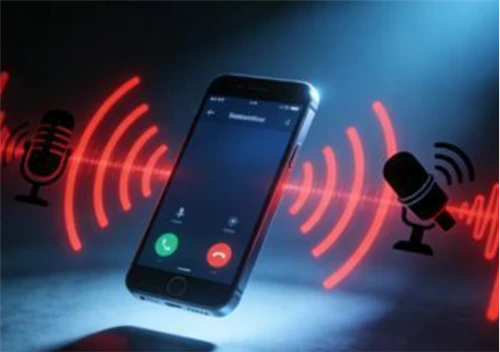
3.Acoustic wave detection
Some mobile phones emit weak sound waves (such as screen refresh sounds) at specific frequencies, and highly sensitive microphones can capture these signals.

Part Four: Practical Application Scenarios and Precautions
1.Prevent cheating in the examination room
By deploying mobile phone signal jammers or portable detectors, it can effectively prevent examinees from cheating on their mobile phones.
2.Security inspection of confidential premises
In military or commercial confidential areas, mobile phone detection is an important means to prevent information leakage.
3.Personal privacy protection
Understanding these technologies can help you detect potential eavesdropping or tracking devices and protect your privacy and security.
4.Legal and Moral Boundaries
It should be noted that probing others' mobile phones without permission may involve legal issues. It is essential to use these technologies within the legal framework.
Conclusion: The balance between technology and responsibility
Mobile phone detection technology is a double-edged sword. It can be used to maintain security, but it may also be abused. It is hoped that through the popular science in this article, you can view this technology more rationally and use it correctly when necessary.