In the current era of rapid technological advancement, drones, with their flexible, convenient and widely applicable features, are shining brightly in many fields. From high-altitude shooting in film and television production, to precise operations in agricultural plant protection, and even to the "last mile" attempts in logistics and distribution, they are always busy at work. However, with the rapid growth of the number of drones in use, the chaos of "unauthorized flights" has been rampant, posing a real threat to public safety, personal privacy and even the security of critical infrastructure. To address this challenge, unmanned aerial vehicle (UAV) countermeasure technology emerged. Its core involves multiple key links such as detection, jamming, and navigation deception, and has become an important guarantee for maintaining low-altitude safety and order.
"Low, slow and small" unmanned aerial vehicles have low flight altitudes, slow speeds and small radar reflection areas. When traditional radars detect such targets, they are often disturbed by the curvature of the Earth and ground clutter, presenting many technical challenges. To break through the predicament, today's unmanned aerial vehicle (UAV) detection adopts multiple means to work in coordination. Among the active detection methods, the low-altitude small target detection radar achieves target detection by transmitting and receiving electromagnetic waves and analyzing echoes. It has the advantages of long distance, all-weather operation, and large airspace coverage. However, it is prone to the influence of ground clutter, resulting in missed alarms and false alarms. Photoelectric signal detection equipment uses visible light or infrared imaging, in combination with laser rangefinders, to accurately provide target information and store it in real time. However, it has high requirements for air visibility and is difficult to measure the distance of small targets in complex backgrounds.
Passive detection methods are equally indispensable. The radio frequency detection equipment monitors radio signals in the 2020-6G frequency band and has functions such as scanning, analysis, and direction finding. Multi-station deployment can achieve signal positioning. Moreover, the equipment is compact and portable, and can adapt to various environments. However, it has a relatively high requirement for the purity of the radio environment. Acoustic detection equipment detects by identifying the unique acoustic characteristics of unmanned aerial vehicles and can work all day long. The sensors are small, but their effectiveness is limited in high-noise environments and the operating range is relatively short. By comprehensively applying these active and passive detection methods, a multi-dimensional and three-dimensional detection network has been constructed, which has greatly enhanced the detection capability of unmanned aerial vehicles.
Interference blocking, cutting off the control link of the unmanned aerial vehicle
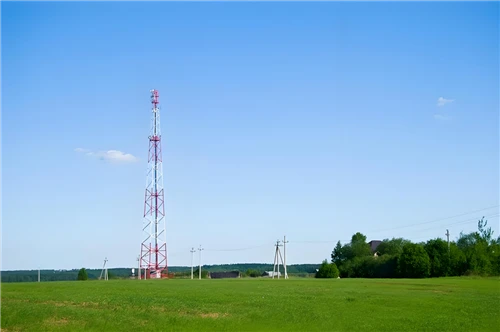
When a suspicious unmanned aerial vehicle is detected, interfering with its communication and navigation links is a common countermeasure. Common multi-rotor unmanned aerial vehicles (UAVs) communicate with operators through specific communication frequencies. Anti-uav systems can then emit powerful interference signals targeting this communication frequency, blocking the transmission of control instructions between the UAV and the pilot and causing them to lose control. Around some airports, high-power radio frequency jammers have been deployed, which can effectively block the signals of unmanned aerial vehicles (UAVs), preventing them from approaching the clear zone and ensuring the safety of take-offs and landings of civil airliners.
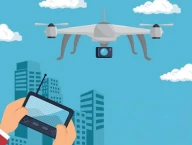
Navigation deception, skillfully guiding drones "astray"
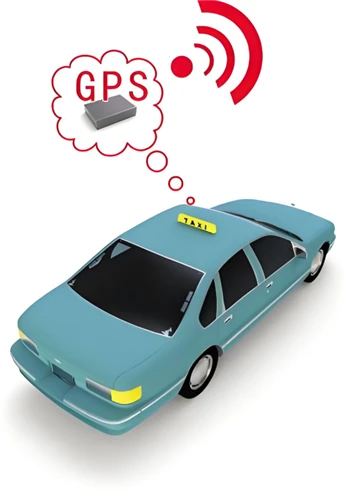
In addition to interference, navigation deception is also a highly strategic countermeasure. Some unmanned aerial vehicles (UAVs) rely on satellite navigation signals to determine their positions and flight routes. Countermeasures can send out fake satellite navigation signals that are indistinguishable from the real ones, causing the UAVs to "misjudge" their positions and flight directions, guiding them away from the target area or to a designated safe landing site. This approach is relatively mild. While avoiding physical damage to the unmanned aerial vehicle, it achieves effective control over it. It is particularly suitable for scenarios where the safety requirements for the surrounding environment are high and forceful destruction measures are not appropriate.
System collaboration provides all-round protection for low-altitude safety
Drone countermeasures are not the isolated application of a single technology, but rather the coordinated efforts of multiple technologies such as detection, jamming, and navigation deception. For instance, first detect and lock onto unmanned aerial vehicles through various detection methods such as radar, electro-optical, and radio frequency, and then, based on the actual situation, flexibly choose interference or navigation deception methods to counter. In some important event venues, not only will high-precision detection equipment be deployed to monitor the surrounding airspace in real time, but once an unauthorized unmanned aerial vehicle is detected, the interference equipment will be activated promptly to block its control signal. If necessary, navigation deception technology can also be utilized to guide the drones to land safely, ensuring the smooth progress of the event and the safety of personnel and facilities.
With the continuous innovation of unmanned aerial vehicle (UAV) technology, countermeasures are also constantly upgrading and developing. In the future, the countermeasures against drones will move towards intelligence and integration. The integration of different technologies will become closer to deal with increasingly complex drone threats, and build a solid low-altitude safety defense line for people's lives and social stability.