In the current era of rapid technological development, drones, with their unique advantages, have been widely applied in many fields. However, the widespread use of drones has also brought about a series of security risks, such as privacy infringement, interference with the operation of important facilities, and even being used for malicious attacks. Against this backdrop, drone countermeasure technology emerged as an important "shield" for safeguarding security.
The working principle of drones: The Basic Understanding of Countermeasures
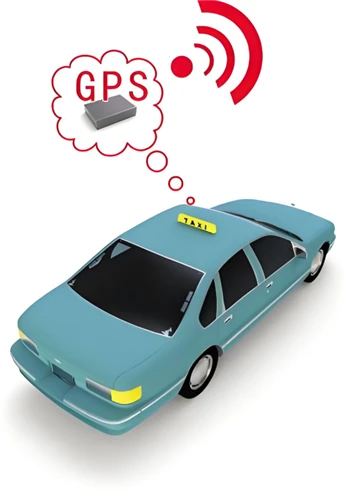
The flight of unmanned aerial vehicles relies on the coordinated operation of communication and navigation systems. Its communication system is responsible for data transmission with the ground control station, including control instructions, flight status information, and captured images or videos, etc. The common communication frequency bands are 2.4GHz and 5.8GHz. Just as humans communicate through language, drones and their operators use these frequency bands to "communicate". Navigation systems mostly rely on satellite positioning signals (such as GPS, GLONASS, etc., operating in the 1.5GHz frequency band) to determine their own positions, plan and execute flight routes, just as humans determine their travel paths based on maps and sense of direction. Understanding these principles is the foundation for comprehending countermeasures.

Signal interference: Making Drones "deaf" and "lost"
Frequency band interference: Cutting off communication and navigation
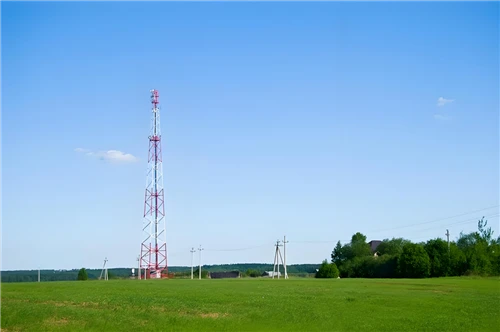
Frequency band interference is a relatively common countermeasure. By transmitting high-power signals in the same frequency band, the communication frequency band (2.4GHz/5.8GHz) and satellite positioning frequency band (around 1.5GHz) of the unmanned aerial vehicle (UAV) are interfered with, blocking the communication between the UAV and the remote control and preventing it from receiving control instructions. At the same time, it interferes with satellite positioning signals such as GPS, making it impossible for drones to accurately locate their own positions and losing their navigation capabilities. It is just like leaving a person without a map or direction guidance in an unfamiliar environment, only able to "blindly" float in the air. This approach is cost-effective and responsive, but it may affect the normal operation of nearby devices in the same frequency band, and legal authorization is required when using it.
Agreement deception: The struggle for control
Protocol deception techniques are even more ingenious. It attempts to take over the control of the drone by forging control signals and simulating the communication protocol of the drone. For instance, sending false GPS coordinates to induce drones to deviate from their intended routes and fly to designated locations; Or send instructions such as forced return or landing, just like hackers invading a system and tampering with the original control information. If the communication protocol of the drone signal is successfully cracked, a stronger control signal can be sent to the drone, enabling "remote control" of the drone and guiding it to a safe area for capture or destruction.
Physical interception: Directly "capture" the target
Kinetic Energy interception: A powerful destruction method
Kinetic energy interception technology includes the use of laser weapons, high-energy microwave weapons, etc. Laser weapons emit high-energy laser beams to irradiate unmanned aerial vehicles (UAVs), causing a sharp increase in the temperature of the surface materials of the UAVs within a short period of time. This leads to structural damage and circuit burnout, resulting in the loss of flight capability. High-energy microwave weapons emit high-power high-frequency pulse electromagnetic waves, causing the microelectronic components inside the unmanned aerial vehicle (UAV) to burn out due to the huge heat energy, resulting in the UAV losing control and crashing. This approach is like directly "shattering" the enemy with a powerful weapon. It is highly effective, but it has a high technical threshold, a large cost, and may have a certain impact on the surrounding environment.
Capture nets and other methods: gentle "embrace" capture
In contrast, launching capture nets is a relatively "gentle" physical interception method. By using handheld or airborne launchers to shoot capture nets at unmanned aerial vehicles (UAVs), once the nets cover the UAVs, their flight can be restricted and they can land safely. In addition, raptors such as eagles can be trained to capture drones, or large drones can be used to carry capture equipment to capture small drones in the air. This approach is suitable for scenarios where there is a need for the recovery of drones, and it can to a certain extent reduce the damage to drones and the surrounding environment.

Perception and Recognition: Discovering "hidden" Drones
Radar detection: "Vision" guarantee at long distances
Radar detection is an important "scout" in the counterattack against unmanned aerial vehicles. The dedicated low-altitude radar is designed in accordance with the characteristics of unmanned aerial vehicles (UAVs) and can effectively identify the features of micro UAVs. It emits electromagnetic waves and receives the signals reflected back by the unmanned aerial vehicle (UAV) to obtain information such as the UAV's position and speed. For instance, Doppler radar can utilize the Doppler effect to distinguish birds from drones and avoid misjudgment. The new type of radar is small in size and has good concealment, which can achieve long-distance detection of unmanned aerial vehicles and buy sufficient time for countermeasures.
Photoelectric tracking: All-round "visual" monitoring
Photoelectric tracking technology uses infrared cameras, visible light cameras and AI recognition algorithms to monitor unmanned aerial vehicles. During the day, visible light cameras can clearly capture the shape features of drones. By comparing them with drone models in the database through AI algorithms, rapid identification can be achieved. At night or in low-light conditions, infrared cameras come into play. They detect and track drones based on the infrared radiation generated by the drone's engine, electronic devices, etc. Acoustic sensors can also capture the characteristic frequencies generated by the rotors of unmanned aerial vehicles (UAVs), assisting in determining the presence and position of the UAVs. By combining multiple means, UAVs have nowhere to hide.
Collaborative defense system: Building an all-round protection network
A single countermeasure technology often has limitations, so a coordinated defense system is of vital importance. This system builds a hierarchical interception network. Firstly, it detects potential threats through long-range radar early warning. Then, by using medium-range electromagnetic interference means, the communication and navigation of the unmanned aerial vehicle are interfered with, causing it to deviate from the flight path or lose control. In the short-range range, physical interception measures such as launching capture nets and using directed energy weapons are adopted to carry out the final disposal of the unmanned aerial vehicle. At the same time, by integrating edge computing and AI technologies, real-time analysis of threat levels is conducted, and countermeasures are dynamically adjusted to achieve full-process automation in detection, identification, decision-making, and countermeasures, providing all-round protection for the secure area.
Drone countermeasure technology is a constantly evolving and improving system that plays an irreplaceable role in maintaining public safety and protecting important facilities. With the continuous advancement of drone technology, countermeasures will also keep innovating to deal with the increasingly complex drone threats.