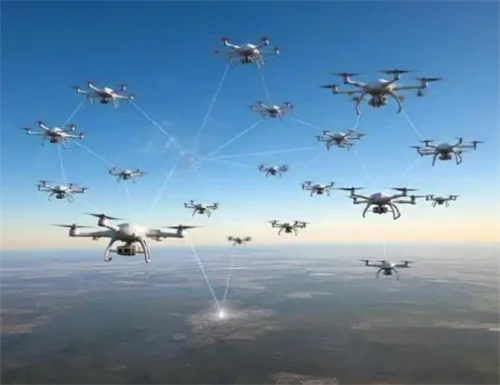
Wireless mesh network, also known as mesh WiFi, is a new type of solution for wireless local area networks and metropolitan area networks. Its core guiding ideology is to enable every node in the network to send and receive signals. As a result, many problems that have long existed in traditional WLAns, such as low scalability and poor robustness, have been easily solved. The emergence of wireless Mesh network technology represents another major leap in wireless network technology and has extremely broad application prospects. The following is a detailed introduction to wireless mesh networks:

First, Definition and principle
A wireless mesh network is a mesh network formed by connecting wireless access points (nodes). These wireless access points are usually installed at network users. Each network user (node) is also a supplier, responsible for forwarding data to the next node. Since each node only needs to transfer data to the next node, this kind of network infrastructure is greatly decentralized and simplified.
Second, core features
1. Full coverage network: Wireless mesh networks are composed of multiple nodes and can cover a wider area, ensuring no blind spots in network signals. They are suitable for large residential areas, office Spaces or remote regions.
2. Automatic routing optimization: Nodes can achieve automatic routing optimization. Devices can intelligently select the optimal path to ensure maximum data transmission efficiency and reduce network congestion and latency.
3. Easy expansion: Adding new Mesh nodes is very easy. Just connect the new nodes to the existing network without complex Settings, making it suitable for constantly changing network requirements.
4. Stable signal: Wireless mesh networks ensure stable signals through automatic connection and adjustment. Even if a certain node fails, the system can automatically find a backup path to maintain the stability of the overall network.
5. Intelligent Management and Priority Setting: Wireless mesh network systems typically offer intelligent management capabilities, which can identify devices in the network and set priorities as needed.
6. Seamless switching: In wireless mesh networks, mobile devices can switch seamlessly between nodes without interrupting the connection, enhancing the user experience.

Third, application scenarios and advantages
Wireless mesh networks are particularly suitable for scenarios that require extensive coverage, complex network environments or high stability requirements, such as large villas, enterprise office areas, public places, etc. Its advantage lies in providing a more powerful, flexible and stable wireless network experience, while reducing cabling costs and complexity.
Fourth, comparison with traditional networks
Compared with traditional WLAns, wireless mesh networks transmit data wirelessly to wired broadband networks, thereby significantly reducing the need for costly wired connections and lowering the complexity of network deployment. In addition, wireless mesh networks also solve the problems of traditional routers in terms of signal coverage, network congestion and scalability.
To sum up, wireless mesh network is a new type of wireless network technology with broad application prospects and significant advantages. With the continuous advancement of technology and the continuous expansion of application scenarios, it will play a more important role in the future.